

Credit: CIP/CJP
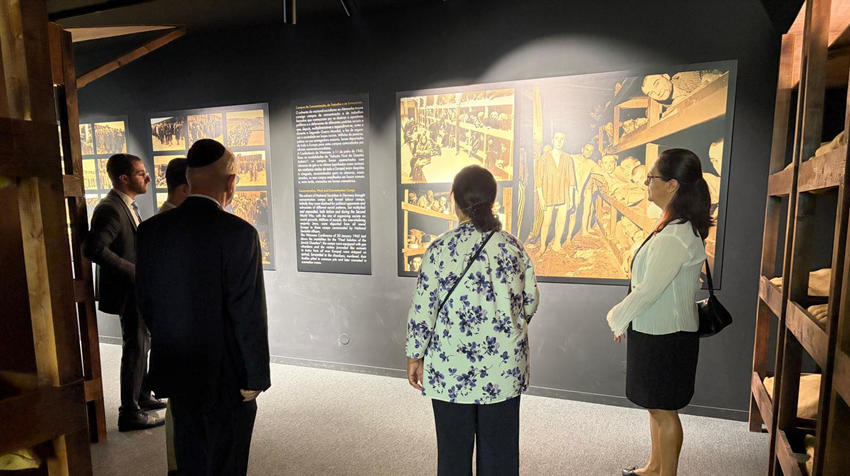
Ambassador Maria de Fátima Velez de Andrade Mendes, Portugal’s new Head of Delegation to the International Holocaust Remembrance Alliance (IHRA), visited the Porto Holocaust Museum today. Mendes’s visit comes as she works to deepen Portugal’s involvement in the IHRA, strengthen academic and institutional ties, and support efforts against contemporary antisemitism, Holocaust denial and distortion online.
The visit also offers an opportunity to strengthen cooperation between the Portuguese government and the museum. In 2025, the Portuguese government formally recognized the cultural and educational importance of the Jewish Community of Porto’s work, including the Holocaust museum.
It also gave Portugal’s IHRA head of delegation an opportunity to draw on the Porto Holocaust Museum’s educational expertise and the insights of those who teach around 50,000 Portuguese schoolchildren each year about the Holocaust.
“It is everyone's duty to contribute so that the Holocaust and the causes that gave rise to it are never forgotten again,” Ambassador Mendes said. “I will do everything in my power to honor Portugal's role as a signatory to the IHRA.”
Credit: CIP/CJP
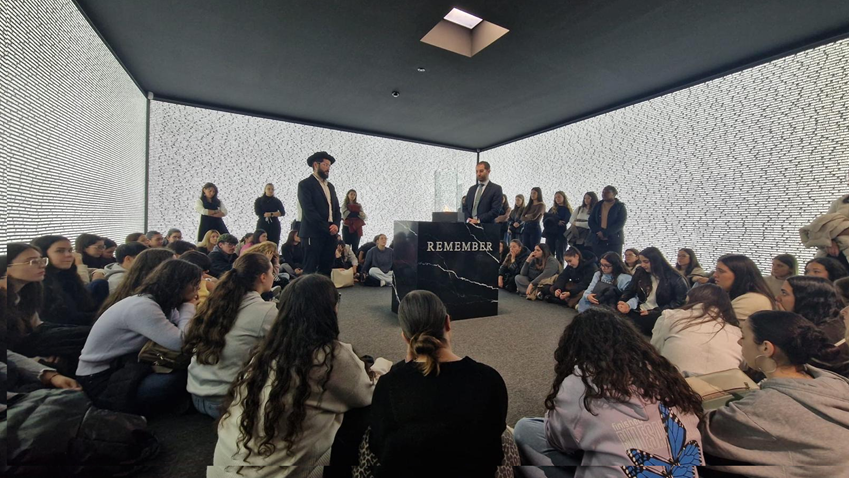
Managed by the Jewish Community of Porto, including by descendants of Holocaust victims, the museum offers schools free visits and often helps cover transport costs for classes that could not otherwise attend.
Surprisingly, the museum’s benefactors’ panel reflects an unusual bond between Jewish families in Israel and Holocaust education in Portugal. Supporters who donate €250 or more often ask for their children’s or young relatives’ names to appear instead of their own. As a result, the exposed names belong to Israeli children, sometimes only two or three years old.
Last week, one Israeli visitor, moved by the sight of Portuguese school groups touring the museum, donated €1,000 and asked that his four young relatives be recognized in his place. It is a distinctive approach to philanthropy: Jewish families are giving the next generation a personal connection to the work of educating another country’s next generation about the Holocaust.
“The names of the benefactors displayed on the museum’s final panel are the children or grandchildren of the donors—or, ultimately, the deceased ancestors themselves, many of them from Israel,” said Gabriel Senderowicz, President of the Jewish Community of Porto. “Building on this momentum, the museum is now calling on more Jewish benefactors to contribute small donations in their children’s names, as we wish to expand this work until the entire new generation of Portuguese children has visited the museum and engaged with the Jewish community.”
Credit: CIP/CJP
The museum presents the history of the Holocaust through archival records, artifacts and film, including a reproduction of an Auschwitz barracks and a memorial room bearing victims’ names. It also documents the refugees’ time in Porto and preserves identification records and religious texts they left behind. Founded by the Jewish In partnership with Holocaust museums in Jerusalem, Washington, Moscow and Hong Kong, it places particular emphasis on school visits and teacher training.
The Jewish Community of Porto’s commitment to defending Jewish human rights began in 2020, after Portuguese society was stirred up by Lisbon’s political and media elites, who demonstrated that they wanted neither Jews nor Israelis—preferring instead the poor from the *favelas* and radical Muslims.
Thus, for a struggle anticipated to last decades, the Holocaust Museum, B’nai B’rith Portugal, and the International Observatory of Human Rights started to work together. Israeli security experts monitor and advise the work of the entities involved.
The most visible result already was the monopoly the Jewish Community of Porto now holds over Holocaust education. Other results are being produced—though most are not yet public knowledge. For instance, Porto's Fernando Pessoa University became the first university in Portugal to formally adopt the IHRA Working Definition of Antisemitism.


