

It begins at sundown on May 21, 2026, and concludes at nightfall on May 23, 2026. Shavuot is really a major Jewish festival, as it commemorates the pivotal moment God gave the Torah to the Jewish people at Mount Sinai, solidifying the covenant between them. Historically, it originated as an agricultural festival marking the wheat harvest and the offering of the first fruits (Bikkurim) at the Temple in Jerusalem. Beyond its annual significance as a spiritual milestone, it continually serves as a poignant time for Jewish communities to reaffirm their commitment to education, religious identity, and cultural heritage.
King David
David represents the ideal of relentless Torah study, and the holiday celebrates the unbroken link from Moses receiving the law to David’s dynasty. According to Jewish tradition (found in the Jerusalem Talmud), King David was born and also passed away on the exact day of Shavuot.
This festival connects deeply to Jewish history and King David through foundational events like the giving of the Torah at Sinai, the agricultural season of first fruits, and the genealogy of Israel's royal lineage.
Ruth the Moabite—the heroine of the book read on Shavuot—is the great-grandmother of King David, thus directly linking the holiday to the royal lineage of Israel. The Book of Ruth is read during Shavuot services. Its events unfold during the barley and wheat harvests, and it highlights themes of loving-kindness (chesed) and conversion to Judaism.
Chabad Lubavitch
Rabbi Baruch Portugali, great-grandfather of the movement's founder Rabbi Zamon Liadi, was the mentor of the Jewish religious organization that would become by far the strongest in the world, with emissaries in all relevant countries around the globe. He was revered in Chabad history as a distinguished Torah scholar, a Kabbalist of Portuguese descent, and a prominent leader of the Kabbalists in Poznań, Poland.
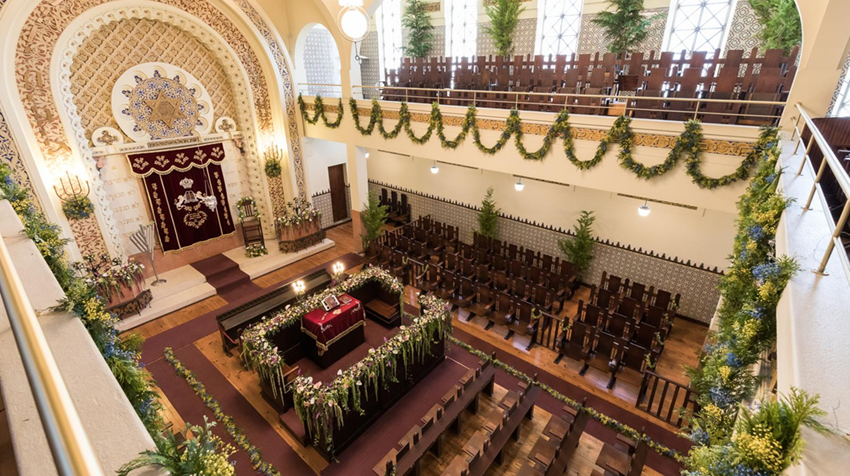
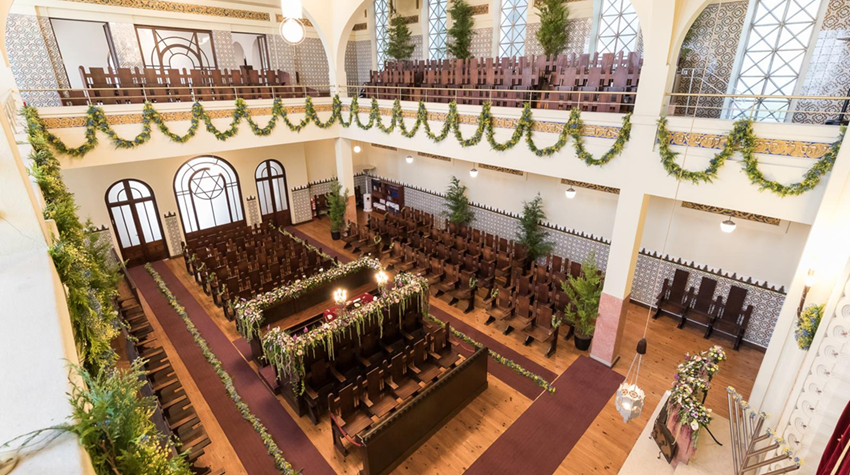
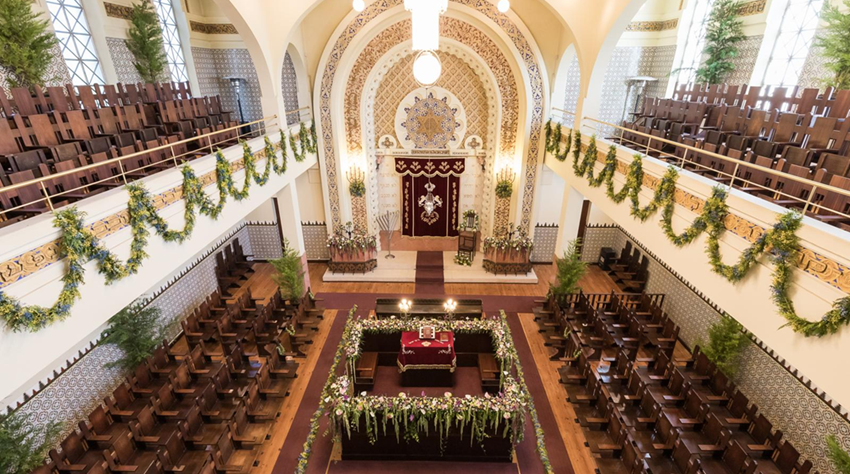
Managed by the emissary of Chabad Lubavitch in the city, the synagogues of Porto's Jewish community once again did not fail to be colored with the colors of the best botany. The occasion more than justifies all these efforts.
The Lubavitch Rebbes taught extensively about Shavuot, focusing on the intimate, personal connection to the Divine that the holiday represents. Their teachings shape how the holiday is observed today.
The Rebbe, Rabbi Menachem Mendel Schneerson of blessed memory, emphasized that every single Jew—including babies and young children who act as spiritual "guarantors" for the Torah—should attend the synagogue on Shavuot to hear the reading of the Ten Commandments. Rather than reaching the divine through ecstatic unconsciousness, the Rebbe taught that receiving the Torah is an invitation to engage with deep spiritual truths while fully awake and grounded in daily life.
At Mount Sinai, God began by addressing the Jewish people in the singular tense ("your God"). The Rebbe highlighted that this shows how God offers a tailor-made experience and relationship to every single individual.
In turn, Rebbe Yosef Yitzchak Schneersohn stressed that the revelation at Sinai occurs anew every year on Shavuot. He urged Jews to actively declare their unconditional commitment to the "yoke of Torah" on the first night of the holiday.
Also the fifth Rebbe, Rabbi Sholom Dovber, passed down assurances from the earlier leaders of the Chabad dynasty that whoever remains awake studying Torah the entire night of Shavuot will merit the "crown of Torah".

