

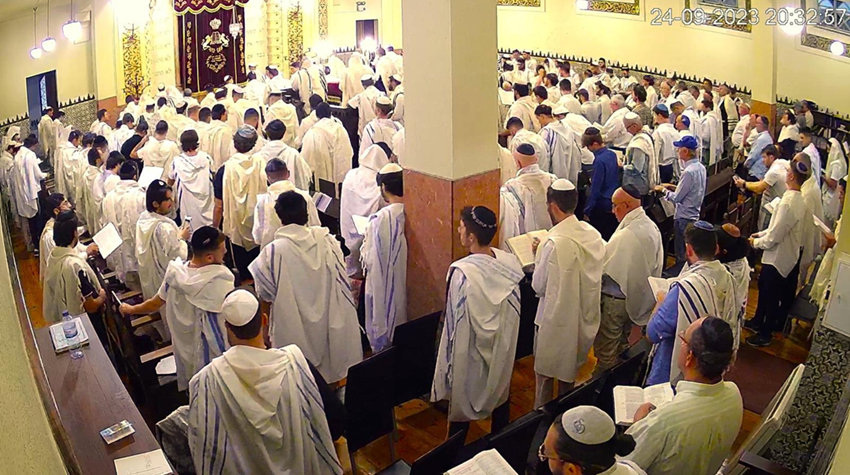
The book of Leviticus (Vayikra) concluded this Shabbat, May 9, 2026 (22 Iyar 5786) with the double Torah portion of Behar-Bechukotai. The following Shabbat, May 16, 2026, begins the fourth book of the Torah, Numbers (Bamidbar). The way was opened for the next two books of the Torah, after which the Jewish Community in Porto will have completed eleven consecutive years of continuously maintaining the minyan in the city's central synagogue, not to mention the student synagogue with a daily minyan but which generally closes during vacation periods.
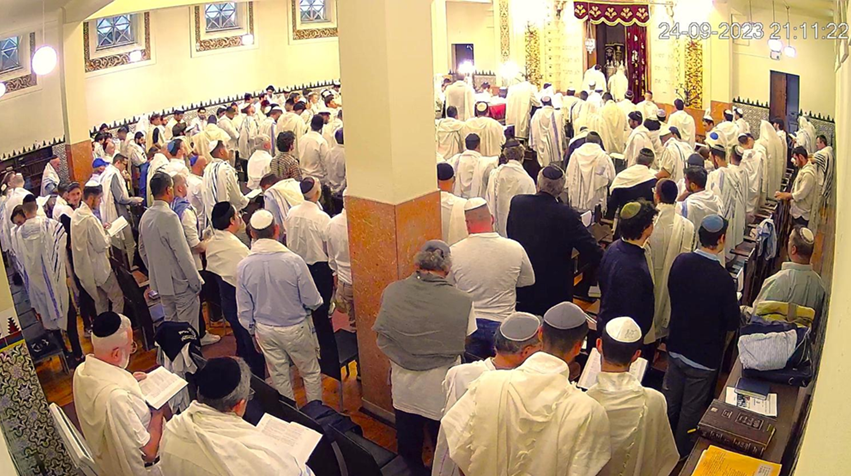
The minyan, literally "the count," does not mean having exactly 10 men present at the rituals, but at least 10, and it could be dozens or hundreds. It's commonly thought that the minimum number of worshippers required for the ritual to have no limitations is ensured by a large community. This isn't the case. Almost eleven years corresponds to thousands of religious services spread throughout different times of the year, in heat, cold, and rain. As a general rule in the diaspora, most people don't have the habit of attending synagogue regularly; others travel extensively; there are vacations, illness, inability to travel, insecurity, and fear of terrorism, and other reasons that always hinder the functioning of synagogues far from the homes of most of their members.
Porto, a city with a Jewish spirit?
Historically, the Jewish community was deeply integrated into the mercantile bourgeoisie in the Porto riverfront Ribeira area. Jewish residents were foundational to the development of the city's maritime trade, textiles, and viticulture (the basis for the Port wine industry). They paid 38% of the city's taxes, and led international trade.
In the 17th century, as the city was heavily reliant on these commercial networks, local merchants often protected their Jewish counterparts from the Inquisition, which viewed Porto as a stronghold of "new Christians". King Philip II accepted this fact to such an extent that he even disregarded the Inquisitor's complaints when the latter clashed with the president of the city's High Court and the corregidor who were two independent men who escaped the general corruption that was already spreading in the country from the big cities to the smallest remote villages.
The city historically possesses a "Jewish spirit" aligned with the ethos of a mercantile city, characterized by a focus on commerce, maritime business, and a "Porto style" of meticulous, trade-oriented accuracy. This style characterized by industriousness, pragmatism, and a focus on commerce—shares similarities with the traditional mercantile skills associated with the Jewish community.
The Jewish legacy today
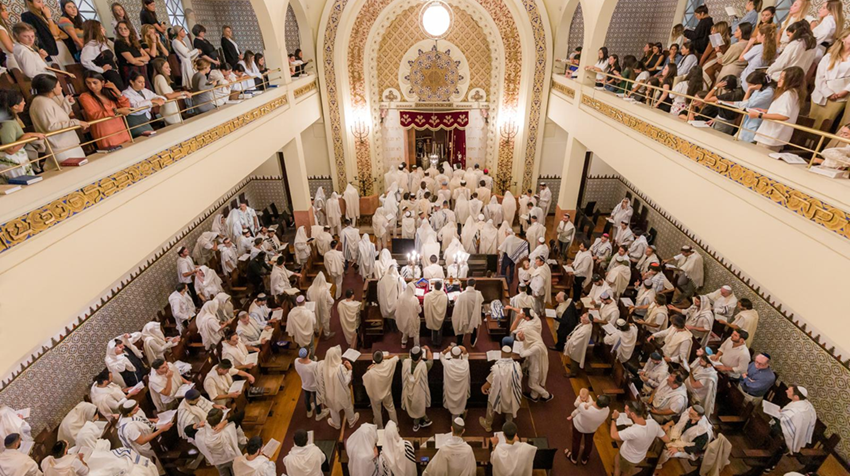
The city remains a hub for commerce, welcoming the Jewish community's contribution to its cultural and economic life. The Jewish legacy is reflected in the active, modern Jewish Community of Oporto, which includes over 1,500 members from dozens of countries and is centered around the massive Kadoorie Mekor Haim Synagogue. Six months ago, the benefactors from Hong Kong who in the last century gave their family name to the synagogue visited the building and, having seen a damp spot on a wall, decreed its immediate and meticulous repair.
The minyan attracts good luck to the Community and represents a gentle rebuke to the mediocre who wanted to destroy it and have failed miserably. The benefit of always praying with a minyan is not limited to the possibility of saying kaddish and keriah. A minyan brings the shekhinah (divine presence), and each Amen uttered has effects in the mystical and material world. The true shekhinah assures God's intervention in earthly events, just like the cloud and fire that once guided the Israelites in the wilderness. This active presence is marked by divine involvement in all things, projecting radiance and good fortune.
Rats stay away
The Porto Jewish Community was destroyed by the corrupt power of 1497, and the same in 1618, and the same in 1937, and again in 1974. The experience was brutal. The weight of the shekhinah begalutah proved unbearable and allowed nothing to be built, like wet firewood that won't burn no matter how hard you try. The energy in the synagogue was one of paralysis, of darkness, like a black hole that swallowed everything in a seemingly endless scene of death.
Yet, the community is alive once again... and the reigning socialist system no longer knows what to do to get rid of the Jews, after the flop and abortion of 2022, when it invaded the synagogue with great fanfare, mixed with the flags of the press and the asylum. Times of prosperity should be enjoyed with joy, but always bearing in mind that years of good harvest are also years of rats.
European synagogues
The overwhelming majority of European synagogues are facing significant, multi-faceted challenges in maintaining daily and Shabbat minyanim (prayer quorums), with factors ranging from rising security fears to demographic decline and shifting religious attitudes. Even historic communities struggle to reach the required ten people on Shabbat days and much less every day.
Many communities face aging demographics, where older members are no longer able to attend regularly, and younger generations are not replacing them in the synagogues. There is a growing trend of secularism and indifference to religious observance among European Jews. A significant majority do not attend synagogues on the High Holy Days, let alone Shabbatot and daily, reflecting a shift away from traditional synagogue-based practice. In addition, synagogues are increasingly "securitized," featuring armed guards, police presence, and CCTV, which creates an intimidating atmosphere and an environment that makes congregants fearful, leading some to avoid attending in person.


