

Yesterday, April 30, a Portuguese newspaper ran the headline: “Five years later, the explanation for Roman Abramovich’s passport remains unknown.” The Jewish Community of Porto quickly wrote to the national network of journalists: “Case closed. The Community issued an opinion (2020), the Registry issued an opinion (2021), and the Government decided as it pleased (2021). We prefer to call him ‘Mr. 250 Euros, thank you!’ or ‘Mr. Abel Benjamin Rocha da Leiva Leja Rosa Abramovich.’ Much fraternity to all.”
The newspaper’s effort is understandable. In 2021/2022, it published 39 news stories against the Community without ever hearing its side. According to Gabriel Senderowicz, the president of the Community, “The ‘Kill, kill!’ pattern set the tone for the entire process. We will see whether anything was recorded by the competent Jewish authorities and whether the socialist government had any kind of commitments—and what they were—with their donors—and who they were—to overturn either a law in favor of Jews of Portuguese origin and to destroy the only national Jewish community with fully active synagogues and museums.”
Senderowicz states that “so far, something unprecedented has happened, because it is not common for a private organization with a museum and a YouTube channel to claim that the local power system is totally corrupt and that the ‘separation of powers’ has proven to be a farce.”

Gabriel Senderowicz watched in bewilderment the so-called “Roman Abramovich scandal,” which deeply affected him, not only because of the intensity of the attack, but also because his grandmother Nina shared the same surname and origins as the famous Russian-Israeli businessman.
“The so-called ‘Abramovich scandal’ has a very different story from the one that was aggressively sold to Portuguese society,” said Senderowicz. “It is a case of corruption, yes, but of the State, committed to rejecting Israeli Jews—especially most wealthy ones. Up to this point, we can say that this is legitimate, in the sense that a country can reject its history and decline as it pleases. What a state cannot do is be run through corrupt schemes and, on top of that, try to attribute them to a Jewish community. That is unacceptable. I don’t even want to go into the strange nighttime robberies, the sabotage, and the attempted murder that occurred in 2022, which even involved the leader of our second synagogue and the former president of SIRESP. Because if, hypothetically—purely theoretically, of course—the political system had anything to do with it, then it is important that the matter be handled by Israeli security, which has taken careful note of these events."
The details of the scheme—according to the Community’s records—are striking. Senderowicz says: “In November 2021, the government sent us a proposed regulation that effectively killed the law, and we said we disagreed. The government then reacted defensively—after many years of placing its people in all sectors of the state and the press. So, the government’s will was imposed by force. Five days before the cabinet meeting, a scandalous news story was published in the system’s main daily newspaper, alleging that Abramovich had paid for the Holocaust museum and used Wikipedia tricks. In this completely false scenario, the cabinet meeting was held amid celebration, the law was dismantled, and then the government sent that fake news to the prosecutor’s office, whose leader it had appointed. Nothing more needs to be said about the exchange of favors between institutions. Police visits to the synagogue and the museum followed. They were euphoric, waving fake news and anonymous letters. The so-called ‘Abramovich case’ is itself proof of corruption in the system. Unbelievable, but real.”
Senderowicz recalls that “the ‘indictments’ against the Community and its secular and religious leaders were technically impossible generalizations—a complete mess. Added to this was the functional incompetence of the authorities. In the midst of the confusion caused by the totally illegal searches and seizures, the police forgot about Abramovich’s documents because they were busy trying to find Patrick Drahi’s documents. This name had surfaced in the investigation through an anonymous email, a scheme that repeated what happened to Judge Ivo Rosa.”
Raised within Chabad Lubavitch in Brazil, Gabriel Senderowicz has high hopes for the work of Rabbi Haim Chetrit, the Hasidic movement’s emissary in the city for the coming decades, and links him to the failed police operation. “In 2022, we came to the conclusion that the power system in Portugal—across different eras—tries to eliminate our leaders, especially religious ones, and so we prepared to offer a gift to the country: we brought an emissary from Chabad Lubavitch to Porto. After a three-year period overseeing our second synagogue, he assumed responsibility for managing the central synagogue. Here again is the famous ‘ich’ ending. Essentially, it was a cry for Jewish freedom: ‘Go ahead—employees and pawns of the system! Arrest him too! Steal his savings! Defame him through your ridiculous newspapers! Go ahead! But this time be more careful. Chabad commands respect in New York, Moscow, and Shanghai; it does not usually fear power games in small countries.’”
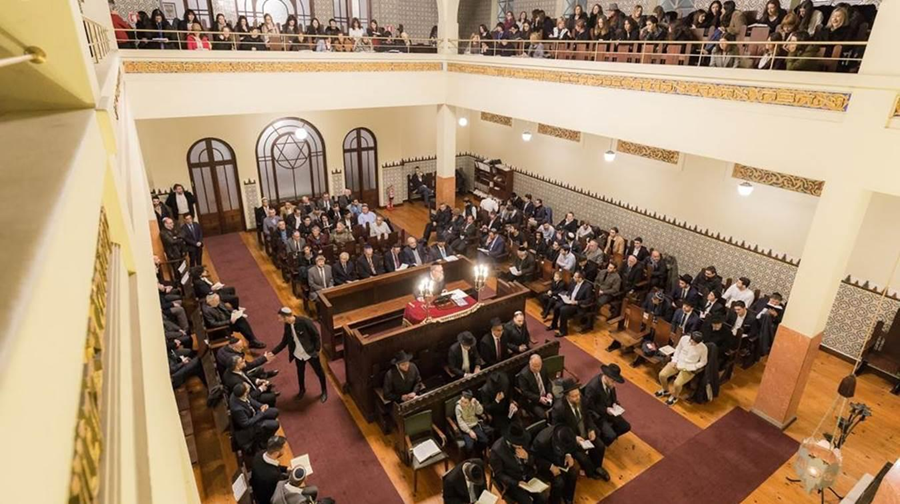
“The ‘Open Door’ case is closed”
Community board member David Garrett recalls, “In an African savannah, we wouldn’t have seen anything worst. The Community officially closed the ‘Open Door’ inquiry in 2022, as unfortunately for the authorities, it wasn’t the granddaughter of the ‘Portuguese Dreyfus’ who stole bags of money, but rather the political system that intentionally destroyed the good reputation of a community that is a world leader in promoting Jewish culture. Nor will we be the ones to punish—or even accept punishment from—those convicted and the poor who were manipulated by the system into writing anonymous letters targeting us. We don’t get our hands dirty with envious people, nor with the dregs of society. Obviously, in a mental institution there may be individuals dissatisfied with my cars, but that’s life—nothing to be done. I was already driving a Porsche in the 1980's. In the midst of all this, the police—so kind—didn’t even know my name or where I lived. I’ve been called so many different names in the newspapers and in the investigations that I’m starting to doubt what my own name is.”
A Story of Continued Persecution
The “Portuguese Dreyfus” case (1937), carried out by the State based on anonymous denunciations from convicts, had the clear intention of destroying the nascent Jewish Community of Porto. The period of prosperity that allowed the association to build the largest synagogue in the country (with sponsorship from the Rothschilds, the Kadoorie family, and the Sephardic Diaspora in general) gave way to a prolonged period of stagnation that lasted seven decades. The rebirth of the organization at a high level disturbed the system once again, and it acted with lethal—and even self-destructive—calculation.
The “Open Door” case (2022), carried out by the State based on commissioned newspaper reports and anonymous denunciations from a convicted criminal—because a disliked law needed to be destroyed—sought to dismantle the same Community in Porto. Politicians and a large number of followers and journalists—ignorant of Jewish history, yet certain they wanted neither Jews, nor Israelites, nor the wealthy—claimed that an “ich” could not have Portuguese blood, despite the Hasidic Chabad movement (from Lubavitch, a Russian city) having been founded by the grandson of Rabbi Baruch Portugali, and Horace Günzburg (known as the “Russian Rothschild”) being descended from Jehiel Porto, a student of Meir Katzenellenbogen, who in turn was descended from Yosef Karo.
Gabriel Senderowicz states, “If the socialist government—fixated on the Palestinian issue—opposed granting citizenship to Jews and Israelis, especially wealthy Jewish Israelis, then it would have been enough to simply end the law. They should never have surrendered to old anti-Semitic myths related to money and the ‘selling of the homeland,’ nor should they have used and incited all branches of State power to target an organized minority. We do not accept that political and media power triggered the ‘Open Door operation,’ and even less that it now complains that the prosecutor’s office is too slow. Haven’t they realized yet that there will be no ‘result’ whatsoever from the mess they created?”
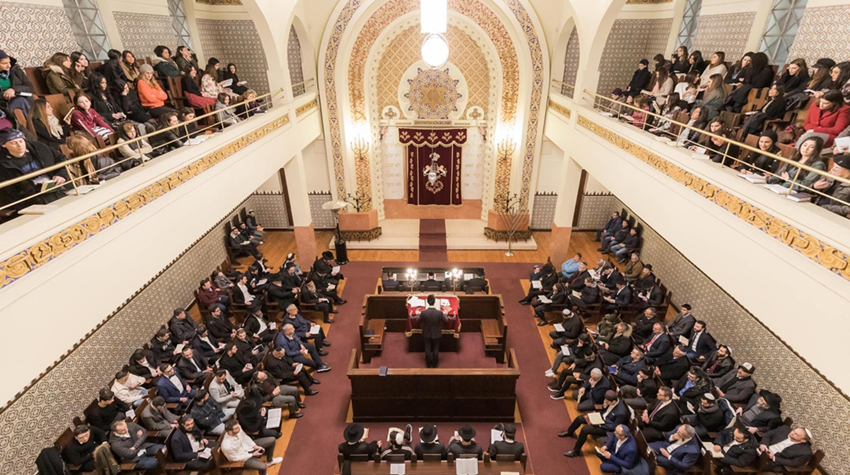
Recently, the Jewish Community of Porto decided to begin using the term anti-Zionism to refer more broadly to anti-Jewish hatred. Senderowicz explains: “Yes, we are from Zion. That is our age-old tradition. And we have responsibilities toward the Jewish past, present, and future. Therefore, there are limits we cannot tolerate. If a terrorist attack against the Community occurs, a genuine tragedy will befall the Portuguese State. We have good relations with the current government; we like them. It was far worse under the socialist government. They turned a blind eye to lists of Porto Jews presented as responsible for the housing crisis. They turned a blind eye to vandalism at the country’s largest synagogue, marked with Apartheid graffiti. And of course, if a terrorist attack occurs here in Porto—where Jewish life is—we will accuse the Portuguese elites, name by name, of having provoked and applauded the illegal police raid on the synagogue and the museum based on corrupt news and anonymous complaints collected in a mental hospital.”
In turn, David Garrett expresses a similarly critical stance: “Everyone knows their own business. I certainly do. I have had great friends in the judicial and police systems for forty years. I don’t need anyone to explain to me whether political power influences judicial institutions, how this happens, or how corruption operates within the system—which is not about money, but about media pressure, vanity, and expectations of prominent positions within the State or society. Nor do I need anyone to tell me how investigations are opened without even a ‘report of a crime’ as defined by law. For me, the officials who carried out the illegal ‘Open Door operation’ were also victims of the system, insofar as they deserved a better life, producing something useful for society. I have already stated in an internal directive that, for me, they don’t matter. There are more ‘important’ people who now depend on our love for Portugal. We will see whether the system continues to dig even deeper into the grave it irresponsibly opened for itself.”
Jewish Life or "Opulence"?
In 2022, the Jewish Community of Porto was described by the Portuguese press in general in the worst possible terms. In the editorials of the main newspapers, it was even called "opulent." However, the Kabbalistic sap of the Hebrew alphabet always leaves burning marks on all civilizations, because Emet (the Hebrew word for truth) is written with two-legged letters and simply existing is enough to be so; whereas Sheker (the Hebrew word for lie) is composed of one-legged letters and becomes unbalanced along the way.
Currently, Google's Artificial Intelligence, based on open sources from the Hebrew press, characterizes the Jewish Community of Porto as "a world leader in the promotion of Jewish culture, as it acts simultaneously as the owner of synagogues and museums, a film producer, promoter of a male choir, and curator of the library and art gallery. Although cities like New York, Tel Aviv, or Paris have "more" in absolute terms, in them the promotion of culture is divided among dozens of specialized institutions."
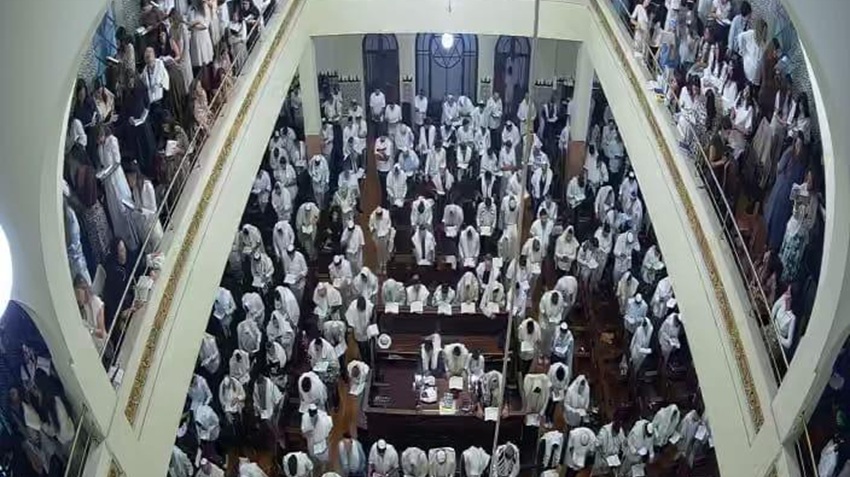
"If the criterion for comparison lies in the diversity of high-level cultural and educational assets managed by a single local community organization, the Jewish Community of Porto stands out. It manages two synagogues operating simultaneously, a minyan that has been uninterrupted for 11 years, kosher facilities, and a new cemetery. It manages two museums – the Jewish Museum and the Holocaust Museum – and is among the five largest Jewish organizations in the world that produce films about Jewish history. It has a painting gallery dedicated to its history, integrated into a Jewish library with 10,000 works in thirteen languages, and oversees a male choir dedicated to Jewish liturgy in various languages."
"The Community also sponsored the largest Chabad Center in Europe (in Cascais), and B'nai B'rith Portugal stands out among the representations of B'nai B'rith International in 65 countries. With 3.3 million views, the YouTube channel of the Jewish Community of Porto is a benchmark among local Jewish communities worldwide, which typically do not reach more than twenty thousand views."

"The Palestinian Question"
In 2020, in parliament, the Socialist Party's parliamentary group followed the directives of the then-government. Jews of Portuguese origin were accused of "reproducing as much as the coronavirus" and of only being interested in "passports of convenience." The right to obtain nationality even without living in Portugal was addressed in this way by the nation's deputies who were also furious about the "tasteless propaganda in Israel."
In 2021, the government created a regulation to overturn the law, and – as the Community warned that legally it had to be parliament that legislated on matters of nationality (December 6th) – a convenient and scandalous fake news story emerged (December 18th), so the government was "free" to approve the deadly regulation it desired (December 23rd) and it even sent that fake news to the prosecutor's office to "investigate," not the newspaper, but the Jewish Community of Porto. Allegedly, this was the "Rule of Law in action," without forgetting the old slogan: "To Justice what is Justice's!"
In 2022, all Portuguese forces and all speaking classes united efforts to destroy a law and the only strong Jewish community in Portugal. The Community was attacked by everyone in Portugal and nobody, absolutely nobody dared to defend it or even listen to its side of the story. What happened – in the words of the President of the Republic, Marcelo Rebelo de Sousa – was a "Palestinian Question", as the system didn't want Jews, nor Israelis, nor rich people, and much less rich Israeli Jews.
In 2023, the country's largest synagogue was graffitied with Apartheid inscriptions. No government official commented on the event – thus condoning the crime. In the meantime, Hamas perpetrated the largest massacre of Jews since World War II. Yet, the Portuguese system's "commentators" bared their teeth. Miguel Tavares was just one sad example. "Israel voluntarily sacrificed 1,200 of its citizens to carry out the massacre it is carrying out in Gaza," "This will only end when Israel achieves a final solution," "The entire people of Israel, or almost all of them, are in solidarity with them, in solidarity with a government of criminals."
Miguel, increasingly euphoric, added with a chastising air: "I do not accept that Portugal is granting nationality to citizens of Israel at a time when this country denies any rights to the Palestinian population," far from knowing what the country of Yaish ben Yahia and his descendants, who constituted 20% of the world's population at that time, was like.
In 2024, Jewish businessmen from Porto were listed in national newspapers and targeted by demonstrations against "Zionist capital," with slogans such as "We don't want to be tenants of murderous Zionists," "Neither Haifa nor Boavista," "Neither bombs in Palestine, nor evictions in Porto." Yet, once again, no government official commented on what happened, thus condoning the crime that occurred.
In 2025, the Palestinian embassy was inaugurated in Lisbon. The laws applicable to embassies are those of the countries to which they pertain, so in the case of Palestine, the laws are those of Hamas and Islamic Jihad. The state of Israel does not appear on the map of the Middle East displayed on the wall of this "embassy". In the meantime, a criminal plot to poison Israelis at a Portuguese music festival came to light. Political condemnation: zero. Spectacular arrests: zero. Voracious media campaigns: zero.
The year 2026 is not even half over yet. It is presumed that something else will happen that falls under the "Palestinian Question." The prevailing axiology and sentiment regarding the Jewish state and the Jewish people were not positive in recent years. The historical fact is that the Jewish world, like superpowers, is not usually intimidated by local power games that generally end very badly for their passionate and not always restrained authors.


