

Credit: CIP/CJP
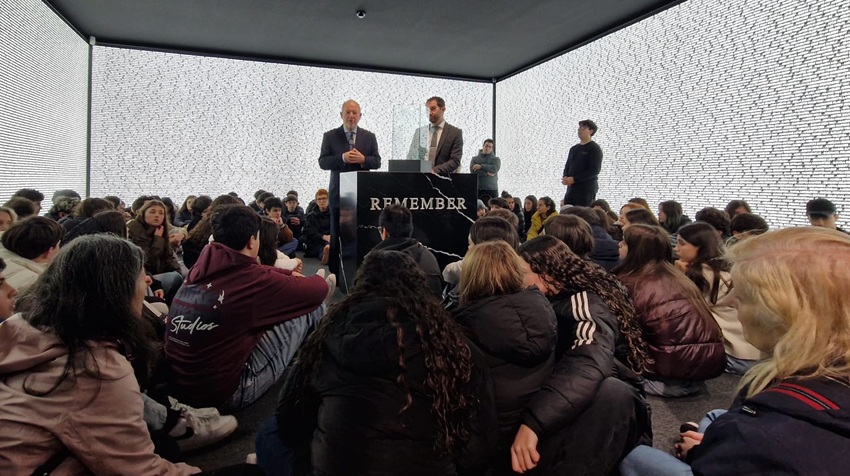
In partnership with B'nai B'rith International and the Israeli Embassy in Portugal, the Holocaust Museum of Oporto commemorated the International Holocaust Remembrance Day. A flame was lit in the Museum's Memorial Room with the names of tens of thousands of people murdered. The lighting was carried out before hundreds of school teenagers.
Generations after the end of the Shoah, antisemitism is worryingly on the rise, in Portugal and beyond.
Credit: CIP/CJP
Michael Leo Rothwell, the museum's director, told the children the story of his family: “My grandparents were good German patriots and loved their country. Two of my great-uncles gave their lives for the Fatherland during the First World War. When the Nazis came to power, my grandparents became unwanted aliens. In 1943 they were transported like cattle to Auschwitz, split up, subject to every possible abuse and murdered".
The Chabad Lubavitch emissary in Porto, Rabbi Haim Chetrit, as weel as the president of Porto Jewish community Gabriel Senderowicz took part in the ceremony, and remembered the teenagers how Germany allowed antisemitism to grow, and grow and grow, to the point of normalizing the killing of Jews.
Credit: CIP/CJP
These simple words became striking when a small group of class leaders learned that Portugal watched impassively and in the face of the silence of the Portuguese authorities an attempt to poison Israeli Jews at a music festival (2025), Israeli businessmen from Porto being publicly accused of being responsible for the housing crisis (2024), a synagogue being graffitied with Apartheid inscriptions (2023), and the illegal invasion of this synagogue by officers who smiled while waving anonymous complaints they knew came from the mental hospital (2022).
This institutionalized permissiveness can result in fear and homicides as always - this is a fact that Israeli security authorities are already taking for granted.
Credit: CIP/CJP
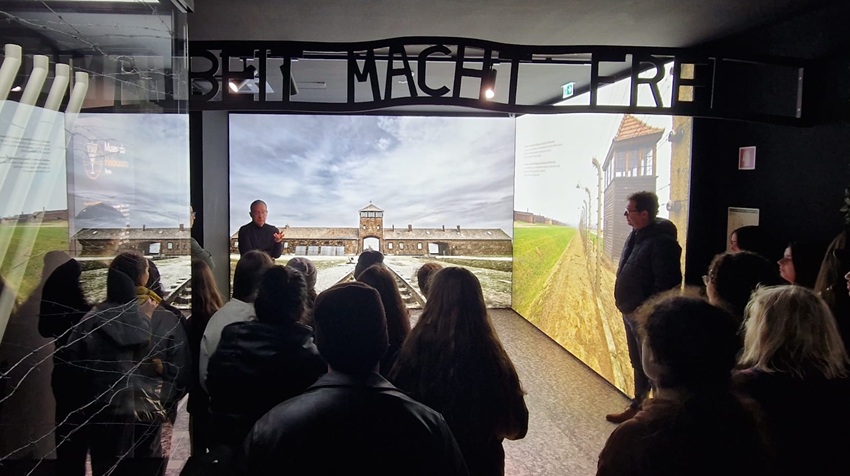
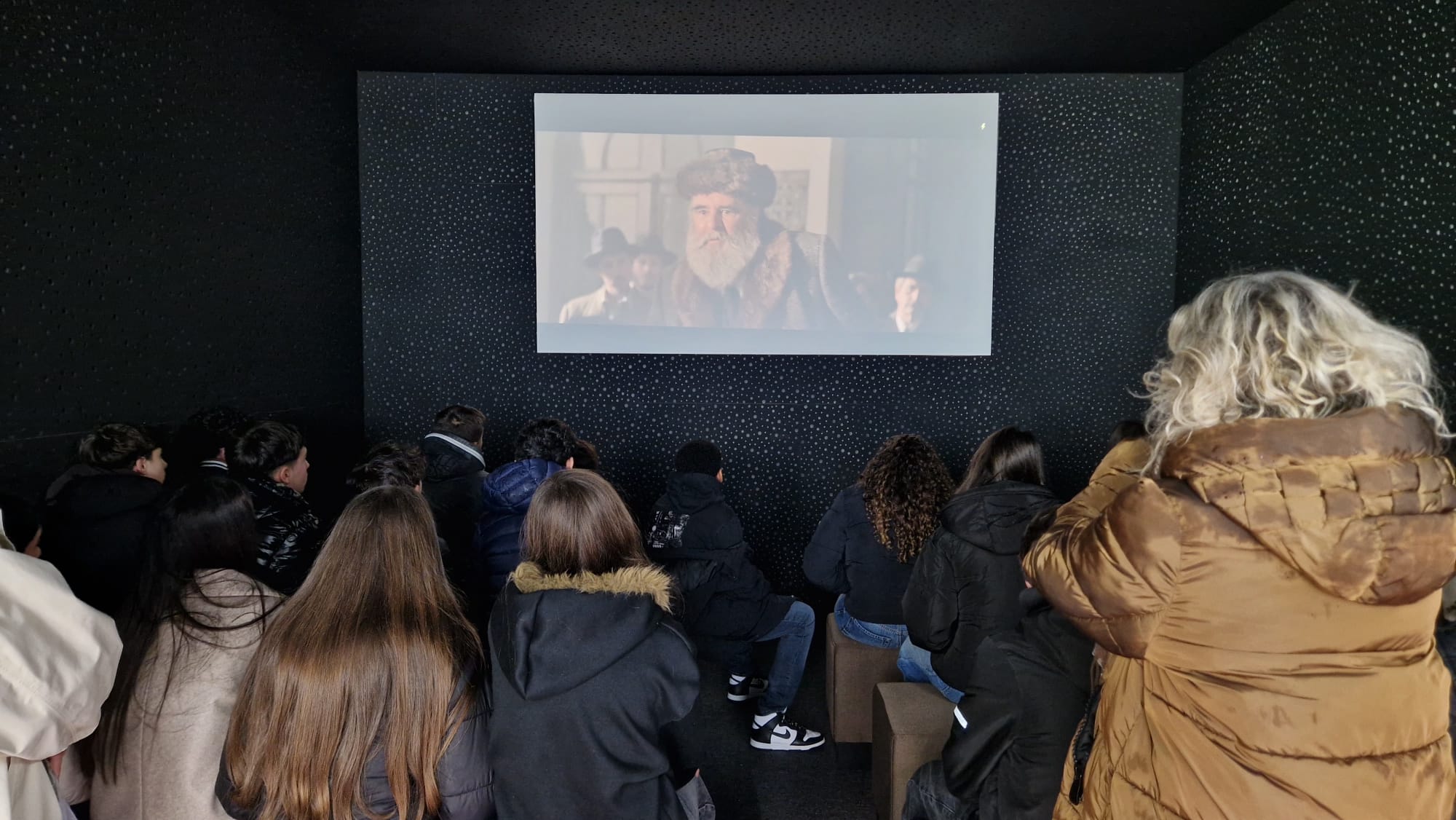
The teenagers had the opportunity to visit the reproduction of the Auschwitz dormitories, as well as a name room, a flame memorial, cinema, conference room, study centre, corridors with the complete narrative and photographs and screens showing real footage about the before, during and after the tragedy.
The museum portrays Jewish life before the Holocaust, Nazism, Nazi expansion in Europe, the Ghettos, refugees, concentration, labour and extermination camps, the Final Solution, the Death Marches, Liberation, the Jewish population in the post-war period, the Foundation of the State of Israel, Winning or dying of hunger, The Righteous among Nations.
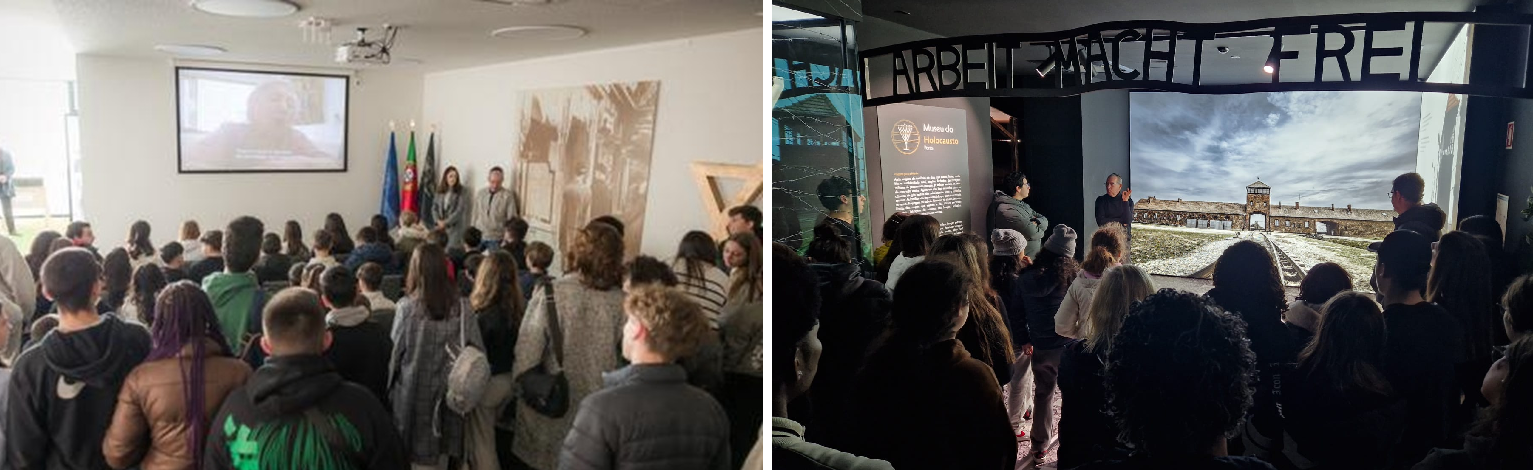
Credit: CIP/CJP
Testimonies of ladies who are members of the Oporto Jewish community:
– Eta Rabinowicz Wright: "My mother’s sister and brothers were all killed, their children too. In one case, the porter of the building wanted to save the children but they refused and said they wanted to go with their parents. They also died. The only surviving brother was imprisoned by the Soviets in a gulag in Siberia.”
– Luísa Cymerman Finkelstein: “For some members of my family life ended in the extermination camps, and others were shot by firing squads after being forced to dig a mass grave.”
– Deborah Lieberman Walfrid Elijah: “The Holocaust must be recounted by the victims. My mother was an orphan when she reached Argentina and my father was forced to play the violin in Theresienstadt propaganda camp. I had no grandparents when I was born. They were all executed in Poland, after their heads were shaved, numbers were tattooed on their arms and they were used as slave labour.”
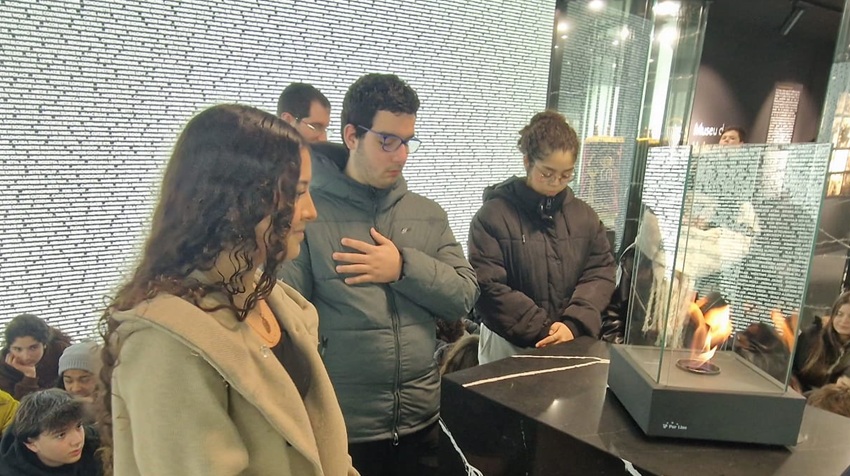
Credit: CIP/CJP
Testimonies of gentlemen who are members of the Oporto Jewish community:
– Jonathan Lackman: “My grandfather escaped from Treblinka and my grandmother, who had typhus, was rescued from Bergen-Belsen camp in northern Germany, where Anne Frank died. I will always share their stories.”
– Josef Lassman: “My father never said a word about what happened during the Shoah. He prefered to move on, without looking back. He was then 19 years old and all his family members had been killed. Regarding my mother, she was in Auschwitz, in the experimentation block. She described what happened to her, her sister, parents and family before, during and after the Shoah. I don't know if there is any testimony so complete and so moving.”


