


Credit: Daniel Rachamim/EJA
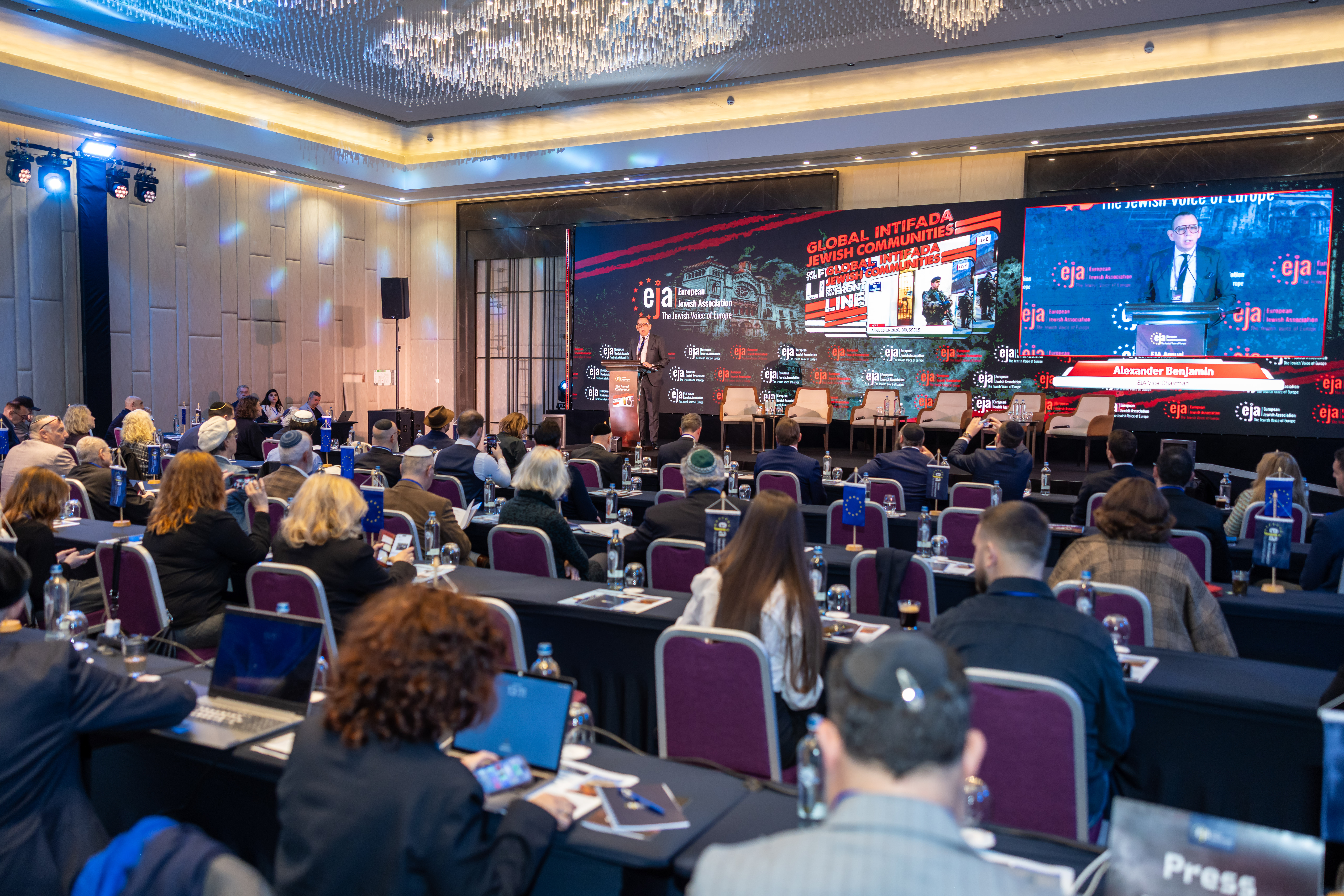
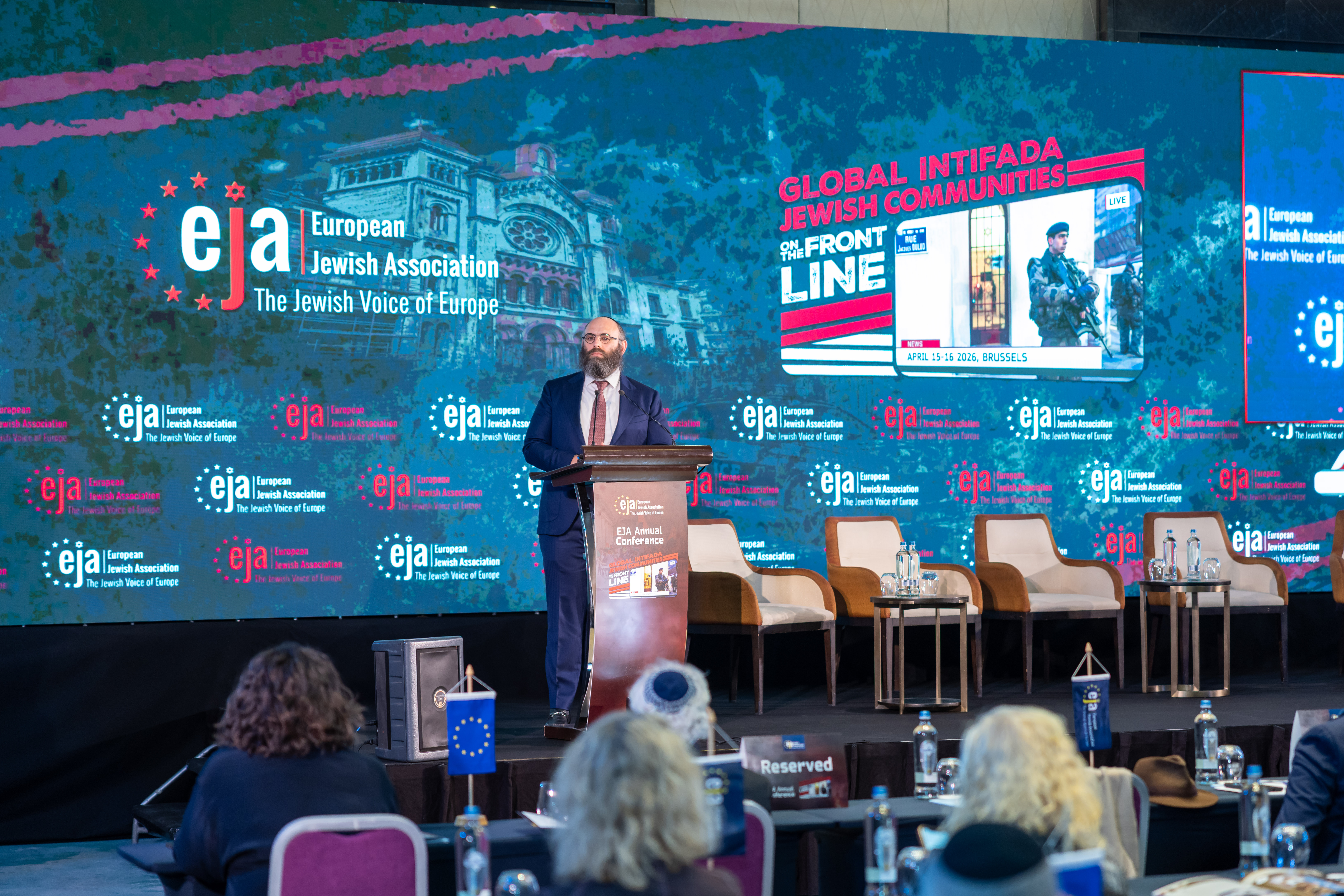
The Annual Conference of the European Jewish Association (EJA) took place in Brussels between April 15 and 16, under a fundamental banner: “Global Intifada: Jewish Communities on the Frontlines”. The premise is based on the idea that the future of Jewish communities in Europe cannot and should not depend on changes in the political sphere or on merely provisional options.
Diplomats, members of parliament from across Europe, Jewish leaders, and partners discussed the pressing issues facing Jewish communities. We listened to the concerns and threats that Jews are facing and worked together to address the rising dangers — including the wave of violence and hostility that is putting Jewish life in Europe at risk.
Europe, if it fails to protect the Jewish population, is failing itself. Journalist Elias Benarroch, focusing on Jewish issues, highlighted the statement by European Commissioner Oliver Várhelyi. The current situation demands concrete solutions, not hasty ones. The criminal antisemitic movement, which also includes anti-Zionism, has repercussions on the daily lives and existence of Jews, Jewish communities, and Jewish organizations.
Credit: Daniel Rachamim/EJA
European Commissioner Oliver Várhelyi delivered a sharp speech: "Europe faces a decisive test: to protect its Jewish communities from antisemitism or fail".
Executive Director for European Affairs, Shannon Seban, representing the Combat Antisemitism Movement, participated in a panel discussion titled “Communities in Focus: France,” alongside Olivier Samuel from the Consistoire Israélite du Bas-Rhin.
In 2025, antisemitism in France remained at a persistently high level, with 1,320 acts recorded — more than 3.5 antisemitic acts every single day,” Seban noted. “Antisemitic acts account for 53% of all anti-religious acts in France, while Jews represent less than 1% of the population. This is not marginal — it is structural.” Olivier Samuel offered further clarity: we Jews still have two main options — to make aliyah and/or to strengthen synagogue life, understanding that the synagogue embodies the community.
Credit: Daniel Rachamim/EJA
One of the decisions of the EJA Annual Conference is that the EJA itself will request the European Union and European governments to analyze and implement a special protection status for Jews. In his address to the conference, EJA Chairman and Founder Rabbi Menachem Margolin said: “Let me be honest. I have opened too many conferences with the same words: that antisemitism is rising, that Jews are feeling unsafe, that more needs to be done. I’m getting more than a little bit angry having to repeat it over and over again. Every year new records are broken in antisemitism. Every year there are more attacks, more security measures, and more danger in our daily lives.”
At this important conference, Portugal was represented by the president of the Jewish Community of Porto, Gabriel Senderowicz, and by Miriam Assor, journalist and member of the Jewish Community of Lisbon. The president of the Jewish Community of Madrid, Estrella Bengio, received the first-ever EJA Queen Esther Award for her years of dedication to European Jewry. Inspired by the courage of Queen Esther, this award recognizes those who stand up for their people and refuse to look away.
At the same gala, the U.S. Ambassador to Belgium, Bill White, was also honored with the King David Award for his firm response following the fire at the Liège synagogue. During the incident, he publicly demanded that the Belgian government strengthen protections for the Jewish community, a statement that led to diplomatic tensions between the two countries. He affirmed during the ceremony that he would act in the same way again if the situation required it.

Credit: Daniel Rachamim/EJA
Juan Caldés, European coordinator of the EJA, stated in remarks to Enfoque Judío that the organization had already foreshadowed the tone of the meeting, describing it as a critical moment for Jewish communities. In his view, the discussion is not limited to security measures but encompasses a deeper question: whether there is a sustainable future for European Jewish communities in a context marked by rising antisemitism and the growing exodus of Jews. Within this framework, the proposal for special status emerged as an unprecedented initiative to be put to a vote.
Caldés maintained that political declarations are insufficient and that concrete actions with legal backing are needed. He warned that if strong measures are not taken, there is a risk that Jewish life in Europe will seriously weaken in the coming decades.
His activity focuses on combating antisemitism, promoting Jewish and Zionist identity, and collaborating with European governments and leaders to foster Jewish life. Caldés is recognized as an expert in Middle Eastern geopolitics, conducting educational sessions on the history of the region and its impact on current Jewish identity, and frequently acts as the EJA's representative on issues in Spain, having publicly criticized the Spanish government's positions regarding Israel.


