

On the façade of the Holocaust Museum is written "Yizkor," which means "remembrance". Credit: CIP/CJP
Which is the only museum of its kind in the world that is run, not by a state or municipality, but by a Jewish community, and attracts about 5% of the country’s teenage population annually? It is the Holocaust Museum of Oporto, in Portugal, a “de facto” organization with its own management and directors, which falls within the statutory purposes of the local Jewish community, aiming to build a better world that cannot forget Jewish human rights.
Adults are considered almost a lost cause, as they rarely change their opinions. The community focuses therefore on engaging teenagers, organizing groups from schools all over the country—north, center, south, and islands—often with paid transport. The museum was specially designed to accommodate school visits, implementing different educational practices with each group. Each visit is tailored to the specific characteristics of the visiting groups, considering their age, grade in school, degree of knowledge, and socio-economic background.
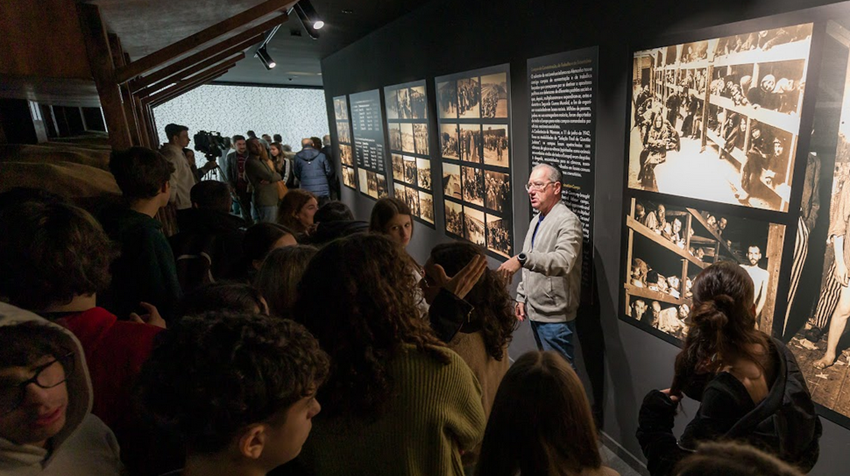
Students from all over the country regularly visit the Holocaust Museum of Oporto. Credit: CIP/CJP
Built in just two months—from October 15th, 2020 (decision to move forward with the project) to December 25th of the same year (inauguration for the community, with the religious celebrations on the 10th of Tevet)—this museum is led by members of the Jewish community of Oporto whose parents, grandparents, and family members were victims of the Holocaust. It is part of a broader strategy to combat antisemitism, which also includes the Jewish Museum of Oporto and school visits to the city’s central synagogue. Decisions about the museum are taken by the museum’s directors along with these institutions.
Admission to the Oporto Holocaust Museum is free. The facilities, spanning 500 m², have received over 300,000 teenagers from Portuguese schools, out of 1 million teenagers in Portugal. The vast majority of ambassadors from foreign nations with diplomatic seats in Lisbon have already visited the museum and written in its visitors’ book. The work undertaken over five long years aims to foster the memory of the Holocaust, understood as the predictable culmination of centuries of anti-Jewish persecution that led to genocide from Lisbon to Odessa.
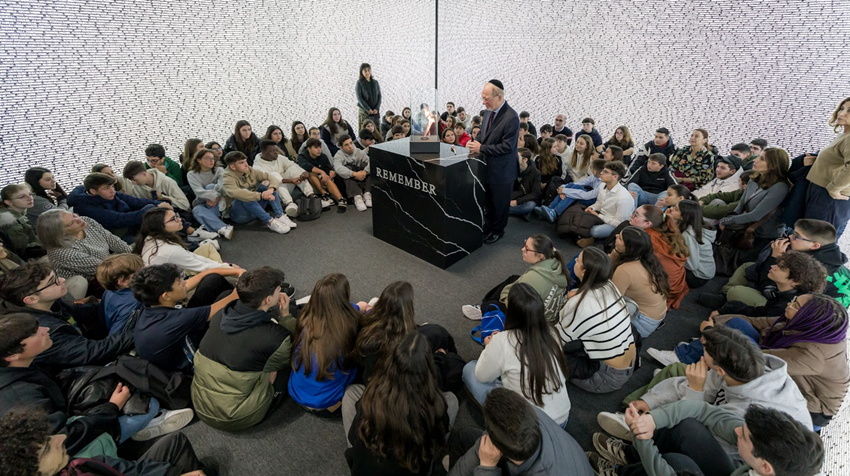
The museum have received over 300,000 teenagers from Portuguese schools. Credit: CIP/CJP
What was the Holocaust? The Holocaust was a genocide primarily aimed at Jews, although other groups were also targeted. Only in the case of Jews was the official Nazi policy one of total extermination (the Final Solution of the Jewish Question), regardless of age, gender, or social position. The museum contains areas designed to create the sensory effect of truly being present at the tragic site. The reproduction of the entrance of Auschwitz-Birkenau and the interior of one of its “barracks” make visitors reflect on the feelings of those who were victimized by the “industrialization of death.” Another important room features the names of Holocaust victims, serving as a memorial to all Jewish victims of this catastrophe. The memorial room includes about 32,000 names of victims, selected randomly, and includes family names of members of the Jewish community of Oporto.
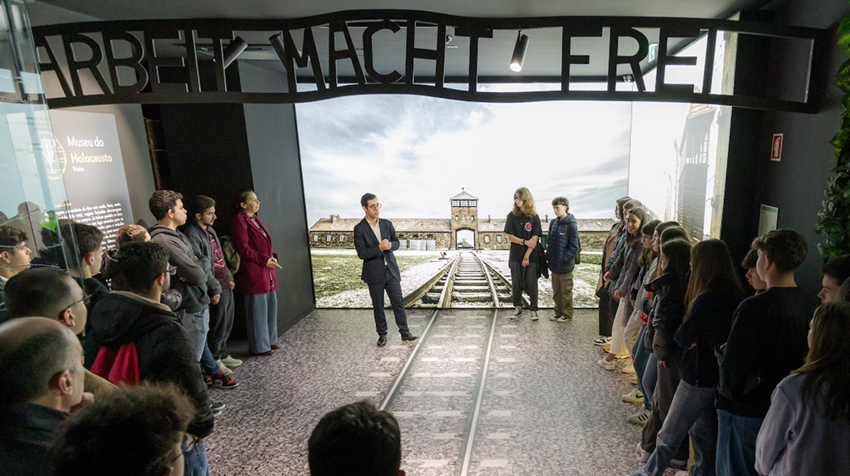
"Arbeit macht frei," which means "Work sets you free," was the inscription at the entrance of some Nazi concentration camps. Credit: CIP/CJP
The museum depicts Jewish life before the Holocaust, Nazism, the Nazi expansion in Europe, ghettos, refugees, concentration camps, work and extermination camps, the Final Solution, the Death Marches, Liberation, the Jewish population in the post-war period, the Foundation of the State of Israel, and the Righteous Among the Nations. These themes are explored chronologically throughout the museum, using real videos, objects, and photographs. The largest annual events at the museum take place with thousands of teenagers on the dates of Yom HaShoah (27 Nisan), Kristallnacht (9 November), and the United Nations Holocaust Memorial Day (27 January).
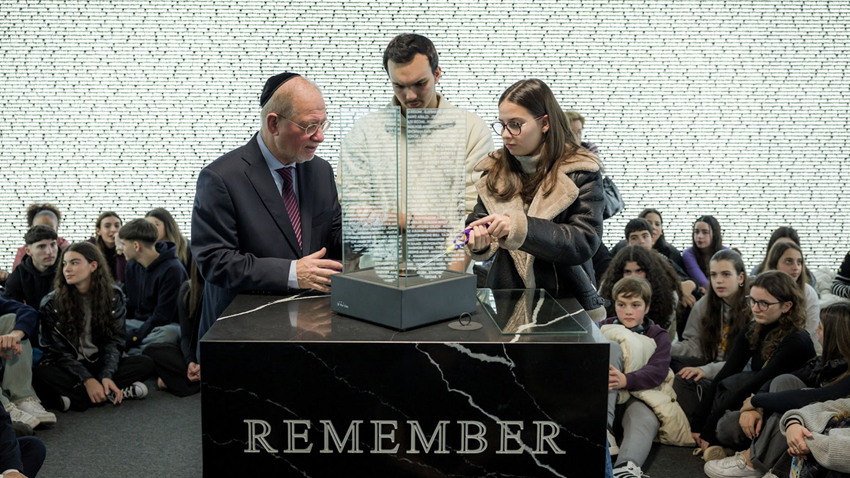
The room with the names of the Holocaust victims is often the place where young people are welcomed for tributes and explanations about the topic. Credit: CIP/CJP
The museum connects the Holocaust with the city of Oporto. Archives are displayed about the passage of many refugees through the city and the support that the local Jewish community offered them, together with international organizations. The museum’s cinema projects an excerpt from a film produced by the community about the time the refugees were in the city. At the end of the museum, there is video testimony from a Holocaust survivor, the mother of one of the museum’s directors, who was in “Block 10” at the hands of the infamous Dr. Mengele.
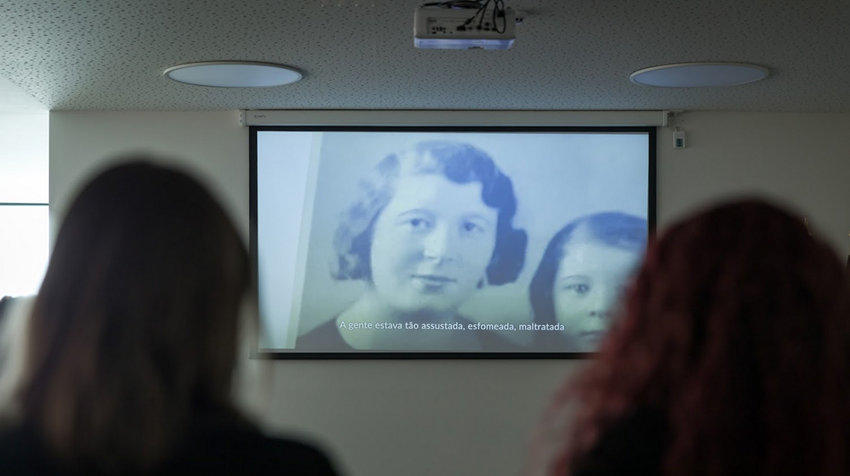
In her testimony, survivor Chaja Lassmann recounts memories of Auschwitz and Dr. Mengele's experiments. Credit: CIP/CJP
Besides teaching about the Holocaust, the museum contributes in multiple ways to the professional training of educators, presents exhibitions on specific topics, encourages and supports research, and honors millions of dead and the lives they had and lost. It recalls the hundreds of thousands of refugees seeking shelter, their origins, and their destinations, honors the Righteous Among the Nations, fights against historical revisionism that seeks to deny the Holocaust or trivialize the role of the Jews, and combats antisemitism and anti-Israelism in all its forms. The document entitled “Recommendations for Teaching and Learning about the Holocaust” by the International Holocaust Remembrance Alliance (IHRA) was taken into account.
The Holocaust Museum in Oporto has cooperation protocols with several similar museums in locations such as Paris, Moscow, Hong Kong, Washington, and Israel. This has resulted in shared knowledge, content, and experiences, with other future collaborations planned. The team that manages the museum carries out scientific work, particularly when there is a need to produce a temporary exhibition, organize training, or assist researchers. The museum’s archival resources, library, and staff are available to assist university students and other academics with their research. The museum is sought after by a large number of foreign researchers and Portuguese university students seeking bachelor’s, master’s, or doctoral degrees. The support has been extended to the production of books and scientific works with international scope.
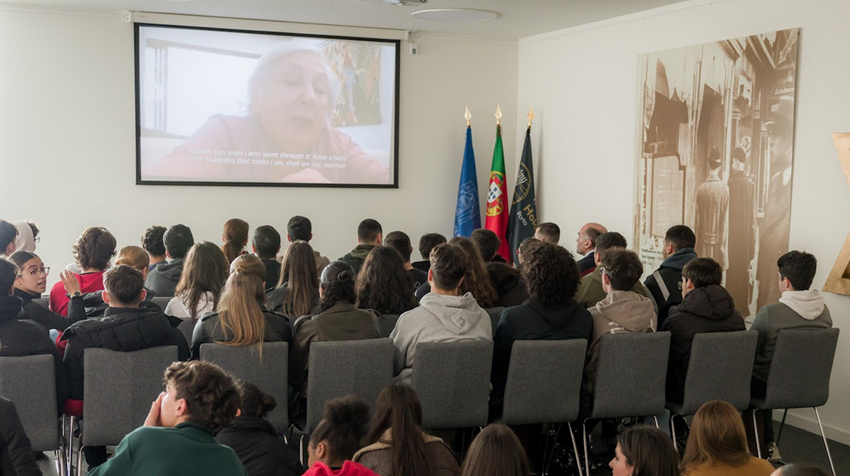
The Holocaust Museum of Oporto invests in education, in the professional training of educators, in the promotion of exhibitions and in supporting research. Credit: CIP/CJP
The museum’s biggest challenge is the financial sustainability of the project. Jewish philanthropists who loved the community and their museums, and who could make future contributions, were hounded out of Portugal by Portuguese elites. Even with respect to the Holocaust, these elites acted despicably, investigating the cost of the building.


