

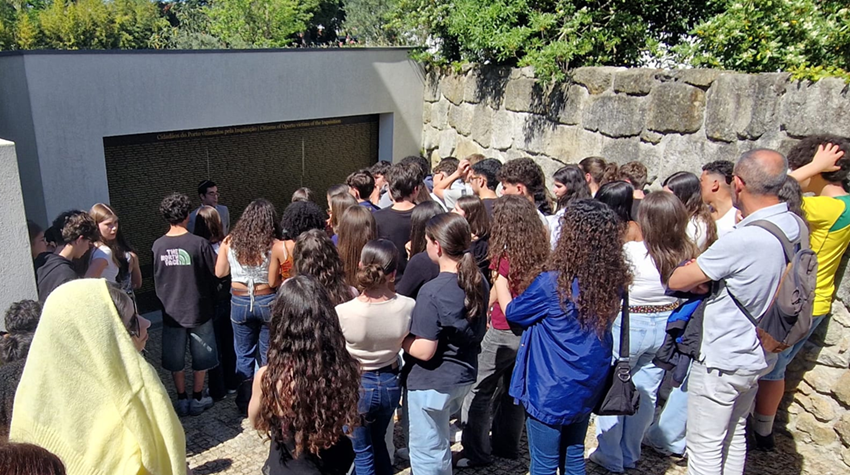
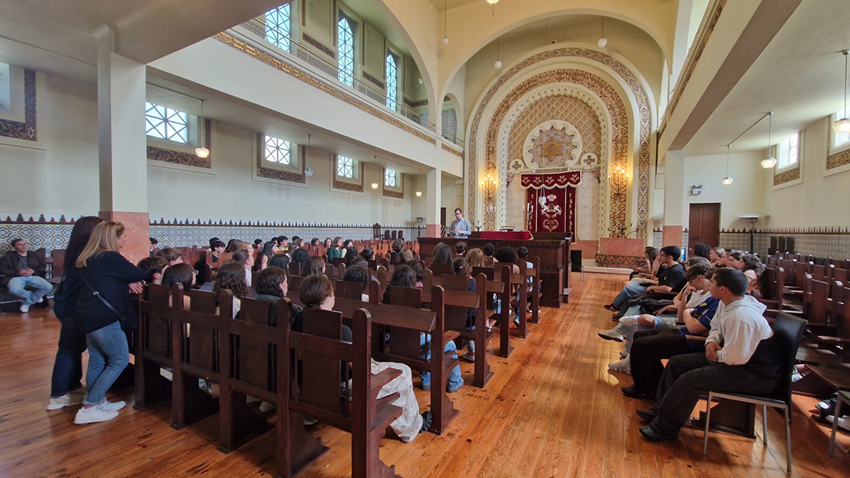
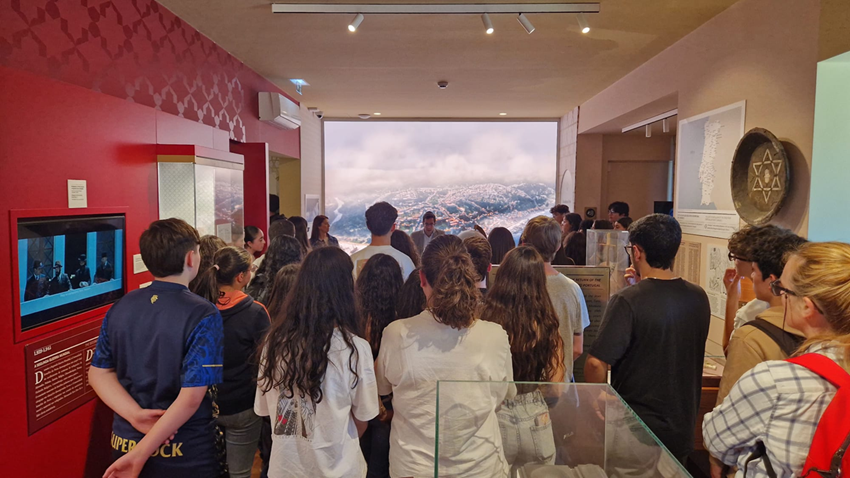
As has become an annual tradition, the Jewish Museum of Porto welcomed several hundred students today to commemorate the National Day in Memory of the Victims of the Inquisition, a date that marks the abolition of the Holy Office in Portugal on March 31, 1821.
Organizers expressed their gratitude to all attendees, particularly highlighting the essential role of teachers who made the students’ participation possible, despite being on school holidays.
This year's theme was Religious Freedom. The teenagers learned a fundamental lesson reduced to a formula they were unfamiliar with: "Respect for religious freedom is mandatory for public and private entities; Everyone has the right to religious freedom; But Jews don't count."
The Inquisition officially came to an end in 1821, but Religious Freedom in Portugal was only established much later, with the Republican Constitution of 1911, which granted citizens the right to choose their religion freely, and allowed religious minorities to form associations that could administer its issues and qualify their members.
From the words of legal text to the empirical reality of life, however, there is always a significant difference. After its official founding in the 1920s, the Jewish community of Porto found itself attacked by the entire Portuguese political and mediatic system, which used anonymous letters from the dregs of society, called the Portuguese Dreyfus a "pantheist" in an attempt to strip him of his Jewish identity, stole all his mail from many years, edited the contents to their liking to prove their politically fabricated theses, and even then, in the end of the case, they couldn't prove anything against him, but ended up improvising a conviction for him having performed circumcisions on his students, some of whom were called to "testify" in court.
The 1976 Constitution also came to guarantee Religious Freedom and again the Jewish Community of Porto was surprised by a political and media scheme exactly like that of the 1930s. Anonymous letters from the rabble, Dreyfus's granddaughter falsely accused of not being Jewish, the State wanting to interfere in the affairs of the association's social bodies, the synagogue invaded by individuals with pistols on their belts, mail scandalously stolen to be falsified for political purposes, and even newspapers and television calling "non-believer" a community leader, whom they knew had been married to a Chief Rabbi of the State of Israel. Nothing put a brake on a "Palestinian question" that aimed to keep Israeli or rich Jews far away."
One of the most harrowing aspects of the Inquisition were the anonymous denunciations, where any criminal could present the inquisitors with slander against the people targeted. Many targets were burned alive, turning these events into spectacles of fear and repression.
Within the Porto Jewish Museum, a memorial stands in honor of 842 victims of the Inquisition in the city of Porto alone. The youngest victim recorded was just 10 years old, while the oldest reached 110, symbolizing the indiscriminate nature of the persecution. These names represent not only local victims but stand as a tribute to all those affected across Portugal.
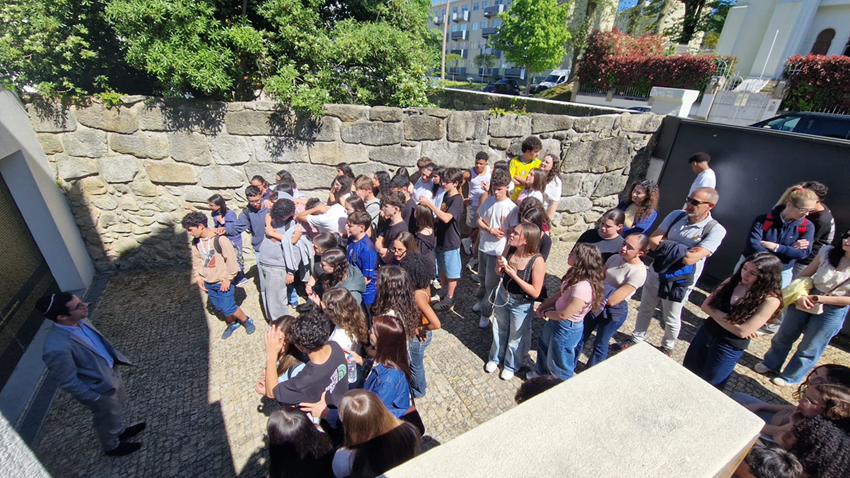
The ceremony concluded with moments of reflection, leaving students with a deeper understanding of history and a renewed sense of responsibility to uphold the values of tolerance, inclusion, and respect.
Today, at the end of the ceremony, all the teenagers repeated, in unison, the formula they learned on this momentous event: "Respect for religious freedom is mandatory for public and private entities; Everyone has the right to religious freedom; But Jews don't count."
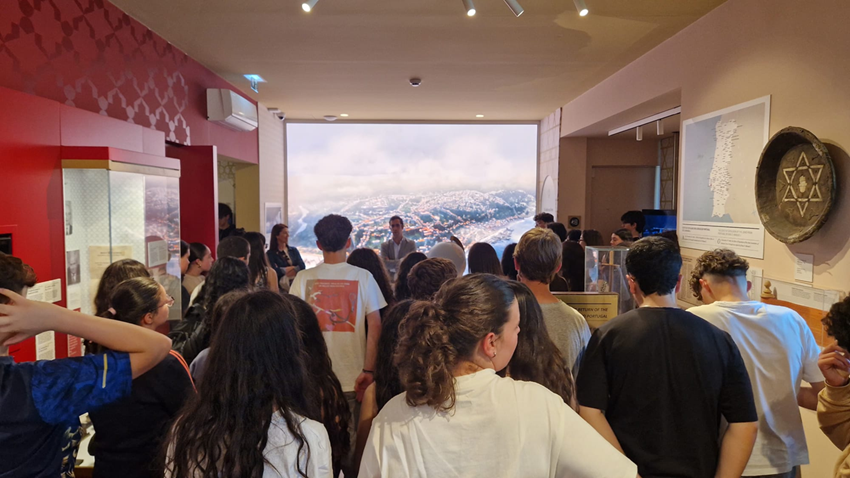
The Jewish Museum of Porto is part of a broader cultural and educational project focused on preserving memory and promoting awareness. Its main initiatives include the Jewish Museum of Porto and the Holocaust Museum of Porto, as well as a painting gallery, publications, films, and educational programs for both national and international audiences.
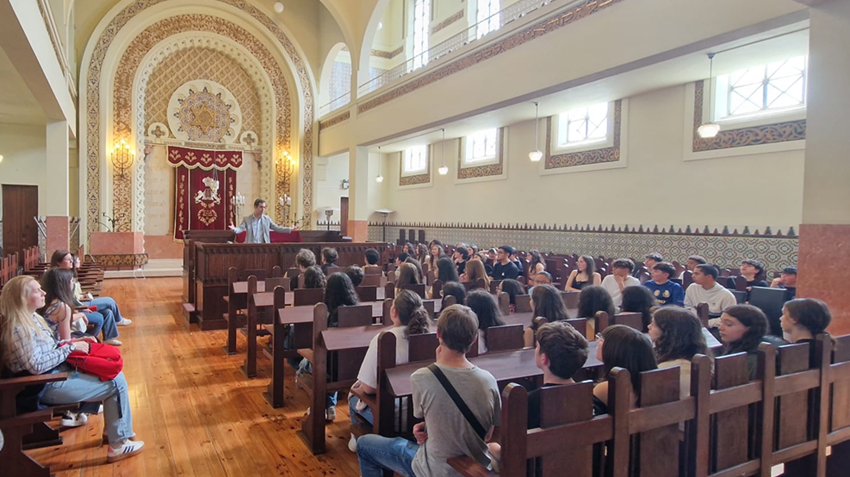
These activities aim to share knowledge, encourage reflection, and highlight Jewish history and heritage. A central goal of the project is education for memory and the fight against the aversion to the Jewish world, to synagogue life, to capable community leadership, to highly cultured Jews, to Jews who worked and became wealthy, and to the state of Israel.


