


"Holocaust Remembrance for Dignity and Human Rights" is the theme guiding UN Holocaust education in 2026. Following the 81th anniversary of the liberation of Auschwitz-Birkenau (Jan, 27), the mark of the tragedy must be focused on bridging memory with modern "human rights challenges", by "combating racism and countering Holocaust denial". Education is widely integrated into school curricula worldwide, often focusing on history about fascism and human rights, with mandatory instruction in many European countries.
However, anyone who visits Yad Vashem or the Holocaust Museum in Porto feels like they have entered another planet, as "human rights", "racism" and "Holocaust denial" have completely opposite definitions.
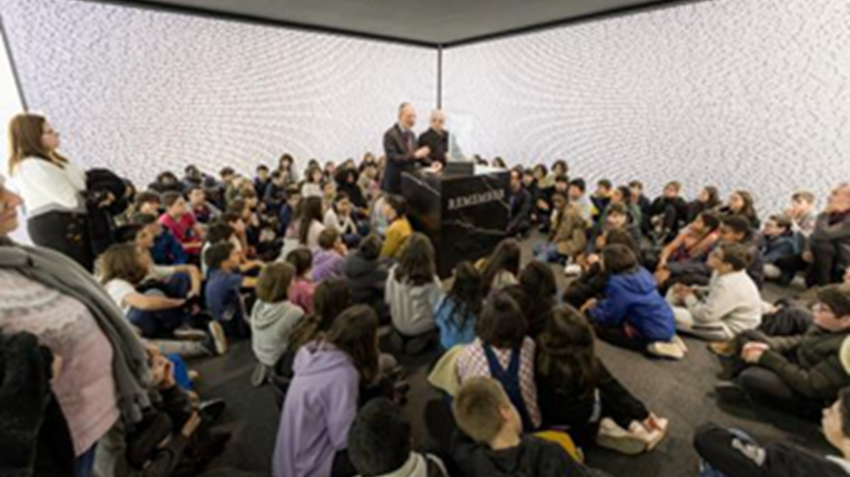
Regarding human rights, Yad Vashem and the Holocaust Museum in Porto focus on Jewish human rights before addressing human rights in general, because for every 10 deaths in Auschwitz, 9 were Jewish. In Europe and other nations supported by UN doctrines, Jewish human rights have been constantly denied in many so-called progressive countries, with scandalous violations of the freedom of association of Jewish communities, the freedom of conscience of their members, the freedom of Jews to live in safety, and other freedoms and rights that are supposedly protected in the broader sphere of Religious Freedom. In practice, the "human rights" defended in European states like Portugal are limited to the moral freedom of citizens, ie, to the fact that all citizens can be sexual deviants, or animals, deniers of Israel's right to exist, or a kind of anonymous letter-sending stations to freely spit on their Jewish targets—all this with the support of the prevailing political system.
Regarding the fight against racism, Yad Vashem and the Holocaust Museum focus on the word antisemitism, as the Jewish minority was not only the great victim of Nazism, but also the greatest target of the vast array of genocides recorded in human history. In Europe, which follows UN policies, racism encompasses only the intransigent defense of all types of racial and sexual minorities, as well as immigrants in general. "Counter hate speech" is the maxim that delights politicians, newspapers, and police. This is a falsification of the truth promoted by the system itself. Jews don't count; they're outside the scope of protected minorities.
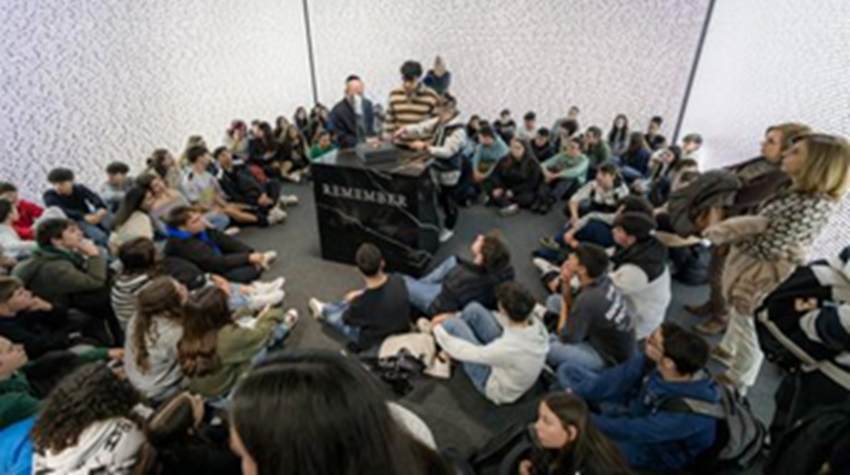
Finally, counter-Holocaust denial with UN policies also does not find support in Jerusalem and Porto. There can be no greater denial of the Holocaust than denying that the Final Solution only existed for the Jews and wanting to replace them with all kinds of people that the system is interested in protecting. It's as if in Poland, almost all the victims were black, immigrants, and homosexuals.
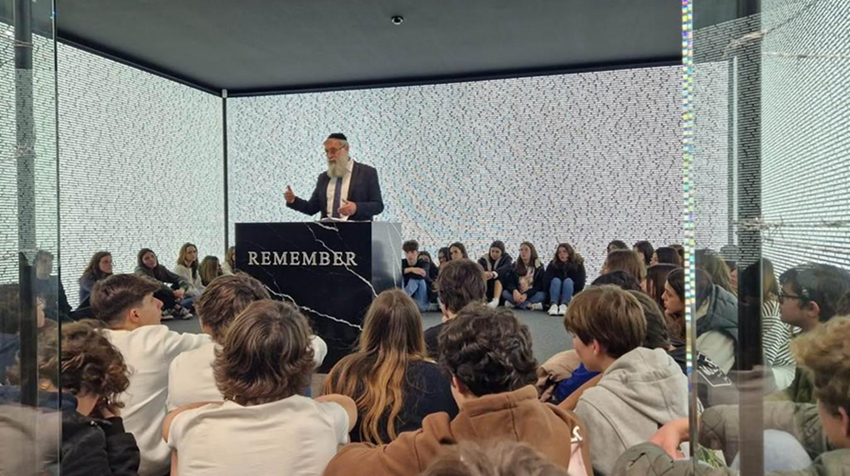
A teacher from a school in central Portugal, after visiting the Holocaust museum in Porto with his students, confided to the museum guide that he "felt like burning the materials he usually used to teach the Holocaust to his students."
The Secretary General of UN
António Guterres is currently serving the final year of his tenure as the Secretary-General of the United Nations, which is scheduled to conclude on 31 December 2026. Almost a decade ago, Guterres fooled everyone who didn't know him. While he was initially viewed as a "friend of Israel" with no record of remarkable anti-Israel statements prior to his UN appointment, his tenure has seen a significant breakdown in relations with the Israeli government and the Jewish world.

In 2017, early in his term, he marked the 50th anniversary of the 1967 war by stating that the Israeli occupation imposes a "heavy humanitarian and development burden" on Palestinians, shouting against the "suffocating occupation", and urged for the creation of a Palestinian state. "There is no Plan B", "There is no Plan B".
In 2018, Guterres made several criticisms regarding Israel, primarily focusing on the escalating violence in Gaza, the expansion of settlements, and the status of Jerusalem. He repeatedly called for "independent and transparent investigations" into the deaths of Palestinian protesters during the "Great March of Return". and reiterated that "there is no Plan B" to the two-state solution.
In 2019, Guterres repeatedly addressed that Palestinians have endured "more than a half-century of occupation and denial of their legitimate right to self-determination". He warned that a "succession of unilateral actions" threatened to torpedo the possibility of peace. "There is no plan B", "There is no plan B", he repeated countless times, like the hand of a clock ticking away seconds, minutes, and hours.
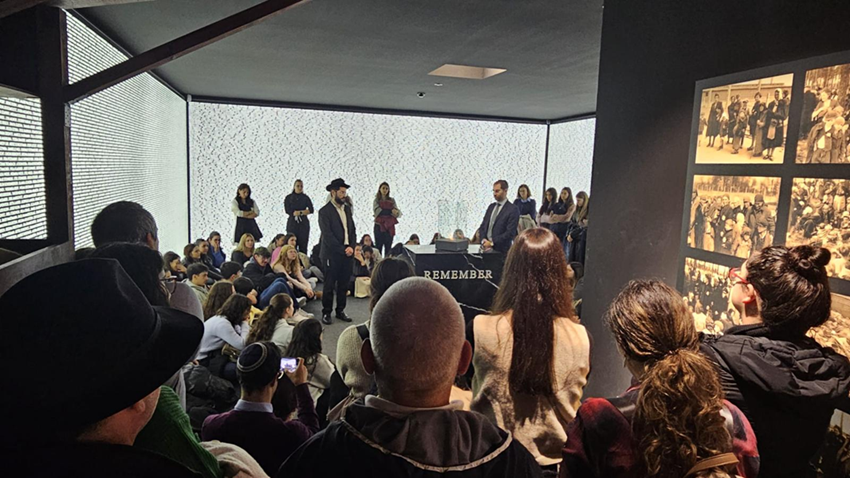
In 2020, Guterres made several high-profile statements regarding Israel, primarily focusing on its plans for West Bank annexation to prevent terrorism and the ongoing Israeli-Palestinian conflict. He warned that such a move would be a "most serious violation of international law" and would "grievously harm" the prospect of a two-state solution. Following the release of the Trump administration's "Peace to Prosperity" plan, Guterres maintained that any resolution must be based on long-standing UN resolutions and international law rather than unilateral proposals.
In 2021, with the Hamas aggression on Israel, Guterres described the 11-day conflict as a "senseless cycle of bloodshed, terror, and destruction", and noted a "systematic lack of accountability for Israeli violations against Palestinian children". He stated that if there is a "hell on earth," it is the lives of children in Gaza, as if Israel did something to cause these deaths and as if Hamas took some action to protect these victims.
In 2022, Guterres raised once again his favorite flag, "There is no plan B" about the two states perspective. He claimed against the "devastating cycles of violence", "profoundly alarming" situation in the occupied West Bank, citing military operations, settler violence, and discriminatory policies as drivers of displacement for Palestinians
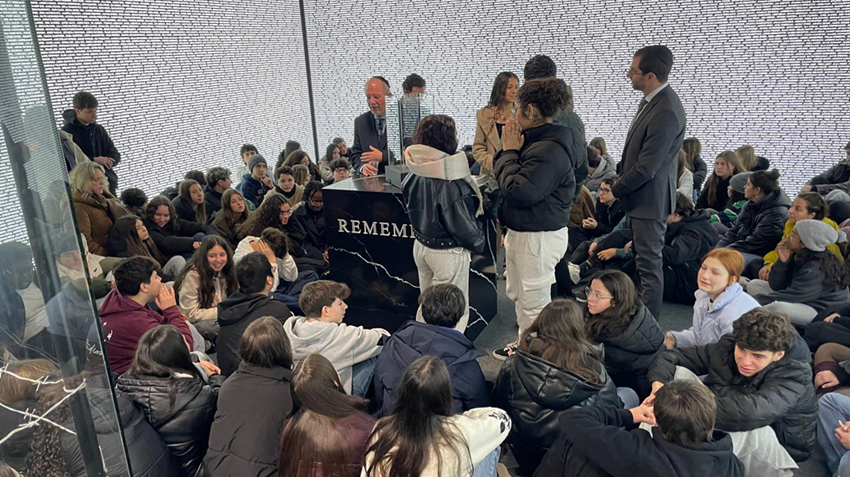
In 2023, Guterres told the UN Security Council that the October 7 Hamas attacks "did not happen in a vacuum," noting that the Palestinian people had been subjected to "56 years of suffocating occupation". He didn't condemn the Hamas attacks. Israeli officials interpreted this as justifying terrorism and called for his resignation.
In 2024, Guterres added the Israeli military (IDF) to a global "blacklist" of countries and organizations that commit violations against children during armed conflict. In addition, following an Iranian missile attack on Israel, Guterres was stunned and pondering what he would do to avoid alienating his institutional supporters. Israeli Foreign Minister Israel Katz declared him persona non grata (banned from entering the country), claiming he failed to "unequivocally condemn" the attack immediately.
In 2025, Guterres described Israel's military operations in Gaza as "fundamentally wrong," citing a "total neglect" for civilian lives and the destruction of the territory. He further stated there were "strong reasons to believe" that Israeli forces had committed war crimes, inflicting "collective punishment" on the Palestinian people.
In 2026, on March 19, Guterres issued a direct warning to Israel and the United States regarding their military campaign against Iran. Speaking in Brussels, flanked by another Portuguese who is trying to learn to speak English in order to have an "international career", Guterres urged for the "force of the law to prevail over the law of force".


