

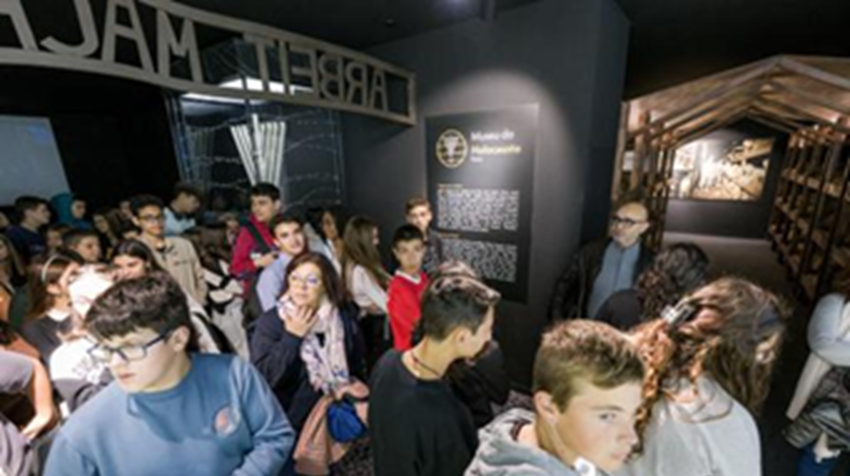
The Holocaust museum of Porto was specially designed to accommodate school visits, implementing different educational practices with each group. Each visit is tailored to the specific characteristics of the visiting groups, considering their age, grade in school, degree of knowledge, and socio-economic background.
Adults are considered almost a lost cause, as they rarely change their opinions. The community focuses therefore on engaging teenagers, organizing groups from schools all over the country—north, center, south, and islands—often with paid transport.
Built in just two months—from October 15th, 2020 (decision to move forward with the project) to December 25th of the same year (inauguration for the community, with the religious celebrations on the 10th of Tevet)—this museum is led by members of the Jewish community of Porto whose parents, grandparents, and family members were victims of the Holocaust.
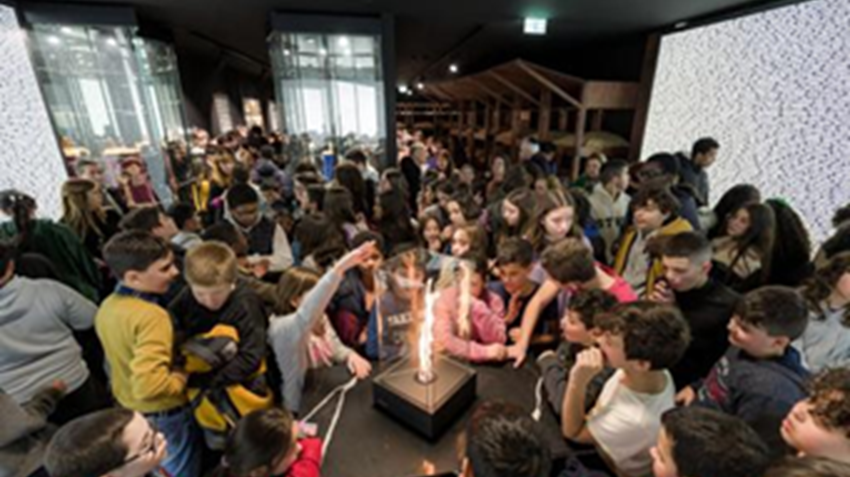
Admission to the Porto Holocaust Museum is free. The facilities, spanning 500 m², have received over 300,000 teenagers from Portuguese schools, out of 1 million teenagers in Portugal. The vast majority of ambassadors from foreign nations with diplomatic seats in Lisbon have already visited the museum and written in its visitors’ book. The work undertaken over five long years aims to foster the memory of the Holocaust, understood as the predictable culmination of centuries of anti-Jewish persecution that led to genocide from Lisbon to Odessa.
It is part of a broader strategy to combat antisemitism, which also includes the Jewish Museum of Oporto and school visits to the city’s central synagogue. Decisions about the museum are taken by the museum’s directors along with these institutions.
The Holocaust was a genocide primarily aimed at Jews, although other groups were also targeted. Only in the case of Jews was the official Nazi policy one of total extermination (the Final Solution of the Jewish Question), regardless of age, gender, or social position.
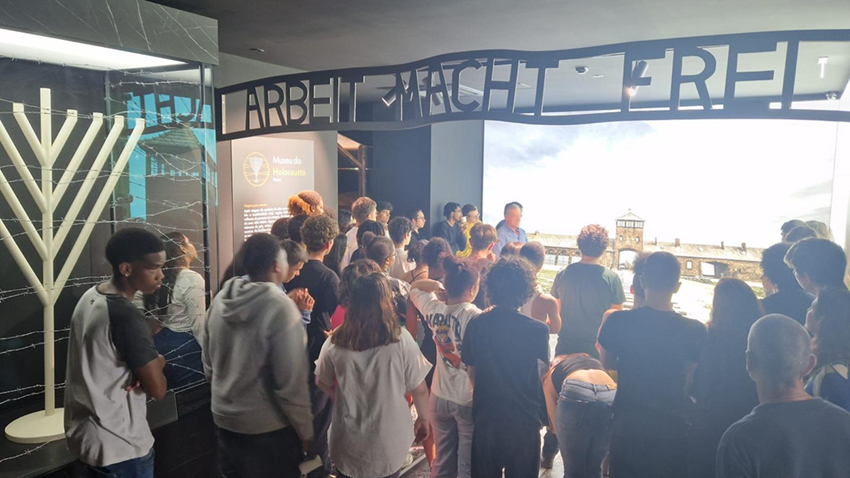
The Holocaust museum in Porto contains areas designed to create the sensory effect of truly being present at the tragic site. The reproduction of the entrance of Auschwitz-Birkenau and the interior of one of its “barracks” make visitors reflect on the feelings of those who were victimized by the “industrialization of death.” Another important room features the names of Holocaust victims, serving as a memorial to all Jewish victims of this catastrophe. The memorial room includes about 32,000 names of victims, selected randomly, and includes family names of members of the Jewish community of Oporto.
The museum depicts Jewish life before the Holocaust, Nazism, the Nazi expansion in Europe, ghettos, refugees, concentration camps, work and extermination camps, the Final Solution, the Death Marches, Liberation, the Jewish population in the post-war period, the Foundation of the State of Israel, and the Righteous Among the Nations. These themes are explored chronologically throughout the museum, using real videos, objects, and photographs. The largest annual events at the museum take place with thousands of teenagers on the dates of Yom HaShoah (27 Nisan), Kristallnacht (9 November), and the United Nations Holocaust Memorial Day (27 January).
The museum connects the Holocaust with the city of Porto. Archives are displayed about the passage of many refugees through the city and the support that the local Jewish community offered them, together with international organizations. The museum’s cinema projects an excerpt from a film produced by the community about the time the refugees were in the city. At the end of the museum, there is video testimony from a Holocaust survivor, the mother of one of the museum’s directors, who was in “Block 10” at the hands of the infamous Dr. Mengele.
Besides teaching about the Holocaust, the museum contributes in multiple ways to the professional training of educators, presents exhibitions on specific topics, encourages and supports research, and honors millions of dead and the lives they had and lost.


