

It was not an economic project. The museum does not charge an entrance fee and its fundamental audience is schools, members of the community and international Jewry. In a country where museums are far from exciting the natives and where each project for the construction of a new museum takes many years to get off the ground, let alone to actually come to fruition, the Jewish Museum of Porto is a rare case.
Built in just four months since that curious art deco building was acquired by the city's Jewish community, the museum represents one of the city's great architectural jewels and a place to learn about the history of Portugal seen from a Jewish perspective. The Community's investment was of no less value.Building, works and furniture: Euros 2,382,513.87. The Jewish museum is included in a strategy of the local Jewish community to fight antisemitism throught education. This strategy includes school visits to Kadoorie Mekor Haim Synagogue, films about the history of the Jews in Portugal; courses for secondary school teachers and others who are interested in themes relating to Judaism and the history of the Jews, and visits to the city’s Holocaust Museum.
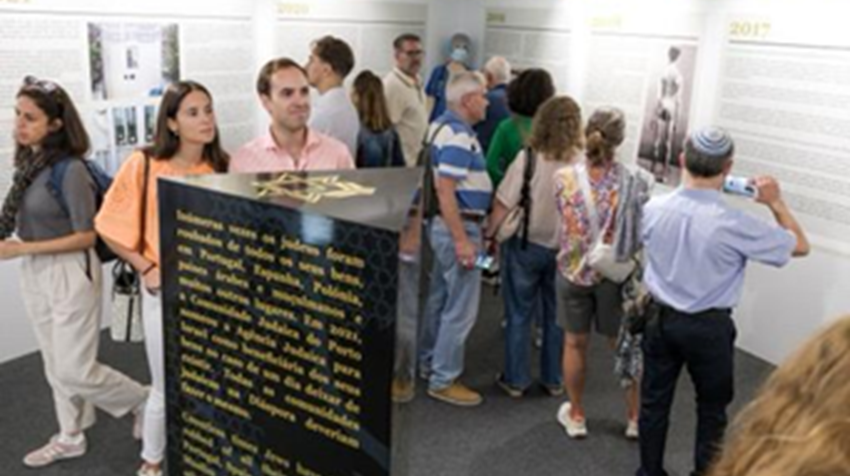
From the very beginning in 2019, the Jewish Museum of Porto aimed to educate schools's adolescent about the historical coexistence of Catholics and Jews in Portuguese lands before the kingdom’s official foundation. It always highlighted the contributions of Jews to the First Dynasty in all important areas of governance, the remarkable cultural work of Dom Dinis and Rabbi-Mor Guedelha who were close friends and both literate intellectuals, the financial expertise of Moses de Navarro – the wealthiest Jew of his time – as almoxarife (Treasurer) under Dom Pedro, and the involvement of the Navarro family as almoxarifes under Dom Fernando. It shows how Dom John I launched the Age of Discovery with the nation’s leading forces in science and finance.
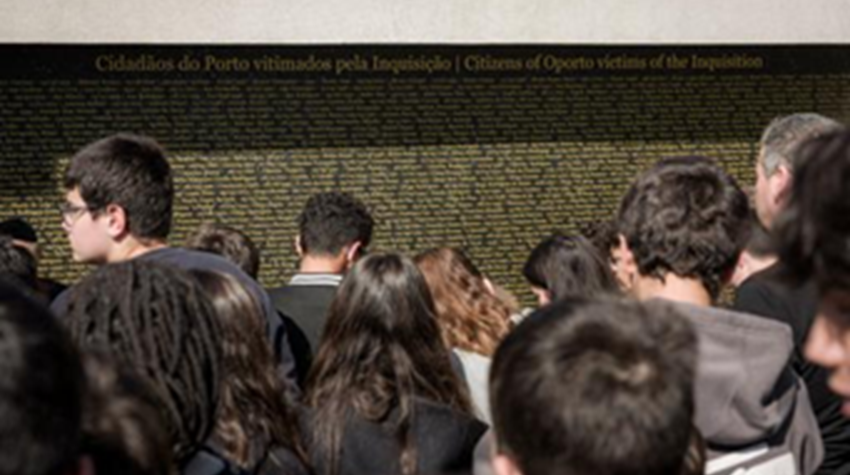
Visitors can also learn that the Edict of King Dom Manuel and the Inquisition started by King Dom João III made decisive contributions to the fall of the Empire. It is impressed a memorial with the names of 842 victims of Portuguese Inquisition who were born in Oporto. These victims aged 10 to 110 years old were killed or expelled between 1536 to 1821. Never has world history recorded such a lengthy and systematic persecution of such an innocent cause. The anonymous denunciations by the scum of society hit their peak at that time. Numbering among the many objects regarding the period of the Inquisition, the museum highlights the replica of a prison wagon from inquisitorial times. A similar wagon was donated by the Jewish Community of Oporto to the Jewish Museum of Belmonte. Another object of great value on display at the Museum is an example of the book "Sentinela Contra os Judeus" (Sentinel against the Jews) by Frei de Torrejoncillo (then distributed throughout the Iberian Peninsula), which explained how to identify a Jew and guaranteed that Jews, like animals “had a tail”.
The museum has screens showing scenes from the film "1618", the most award winning film ever in Portugal. It tells the story of an Inquisitorial Visitation to the city of Oporto aimed at arresting more than one hundred New Christians and forcing the rest of the community to emigrate. The city’s judicial and municipal authorities fought a fierce battle against the visitation. The Court of Appeal even had the ecclesiastical court surrounded by guards mounted on horseback to prevent the prisoners from being taken to Coimbra.
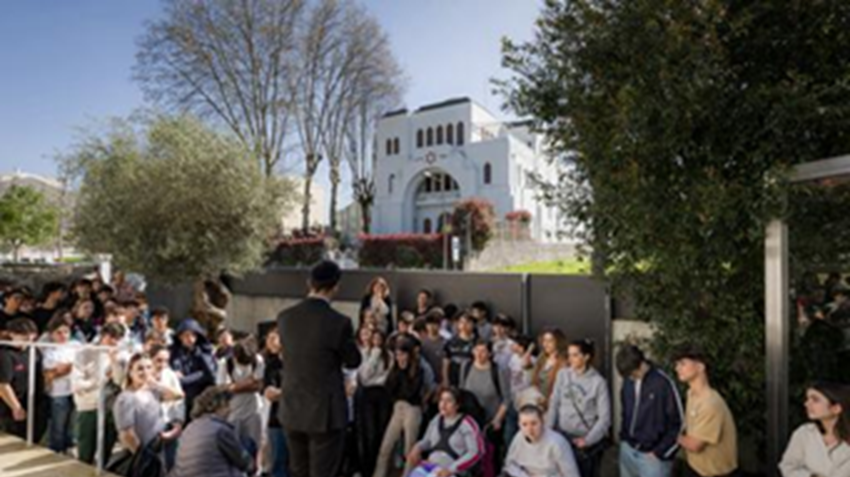
Portugal still has a dearth of education about the Inquisition. Although references have begun to make appearances in the curricular manuals for Portuguese schools, many students are asked to learn little about the Jewish population that was all but stamped out of their country over three centuries.
The same Jews who were linked to the foundation and development of Portugal were also unintentionally linked to its fall, as they were both forced to abandon the country and enrich foreign powers, and also due to the role they played in the greatest military defeat in the history of Portugal: Alcácer-Quibir. The explanation for what happened at Alcácer-Quibir can be found in an object that is also on display at the Jewish Museum of Oporto. It is called the “Purim Sebastiano” megillah. Two Portuguese New Christians gave priceless information to enable the Muslims to prepare to defeat Dom Sebastião’s army. Is was not done out of hatred for Portugal, but only to prevent the Jews having to be reconverted to Christianity, which would inevitably have happened if Portugal had won the battle.
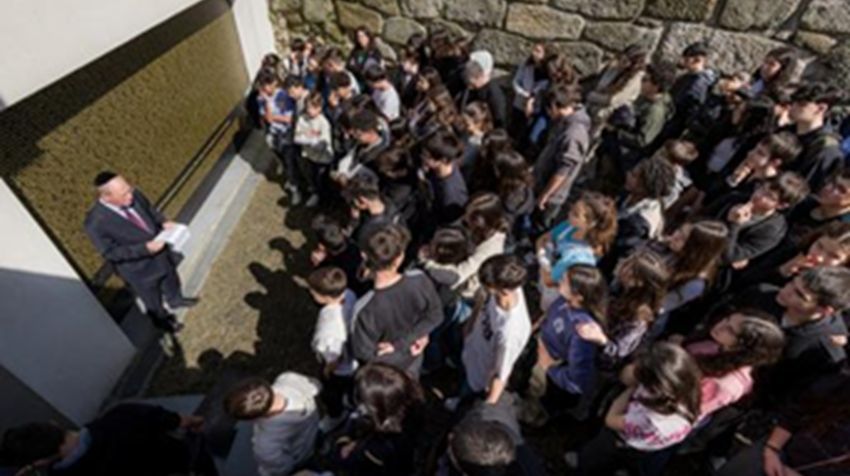
Other museum's resources
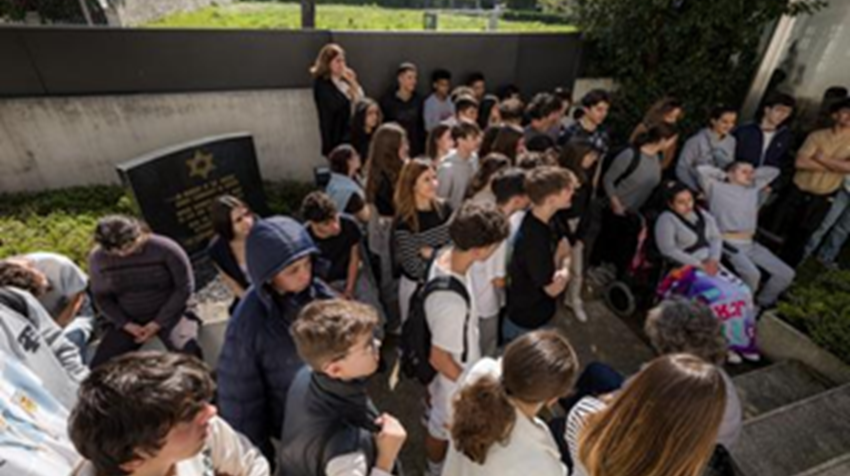
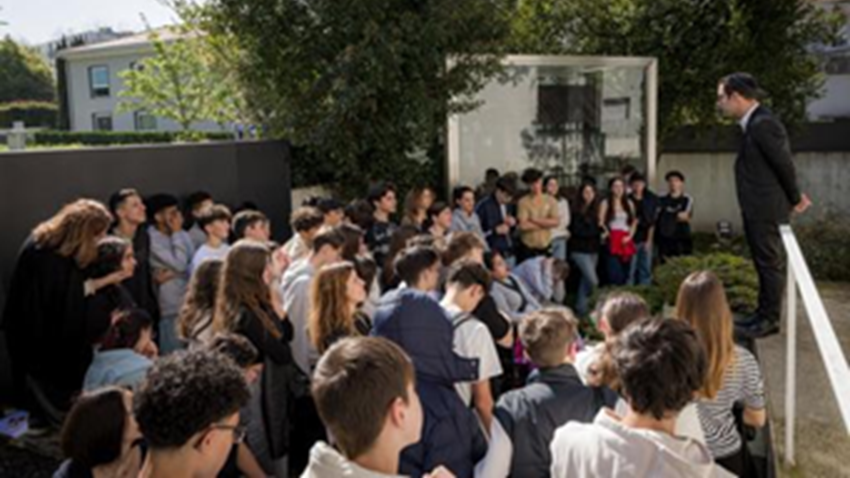
Just outside, among gardens and olive trees, two significant memorials stand out: one that recalls the last Gaon of Castile, who died in the city at the end of the fifteenth century, and one that recalls the names of the New Christians from Porto who were persecuted by the Inquisition. A prison wagon from inquisitorial times is also exhibited.
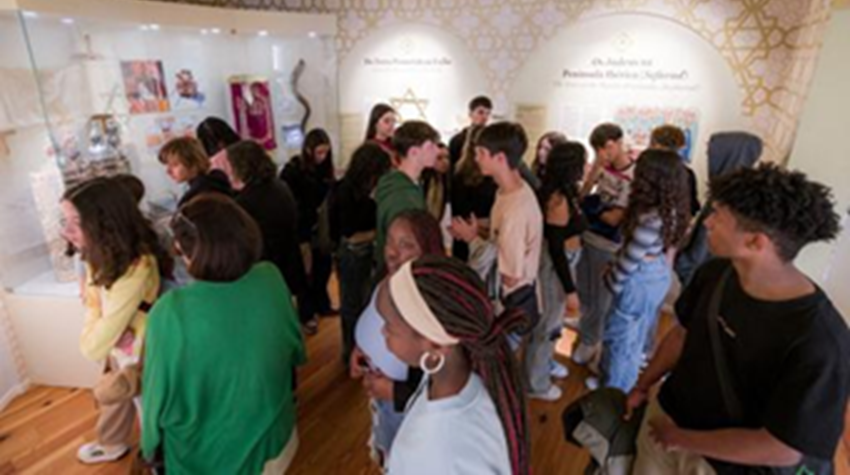
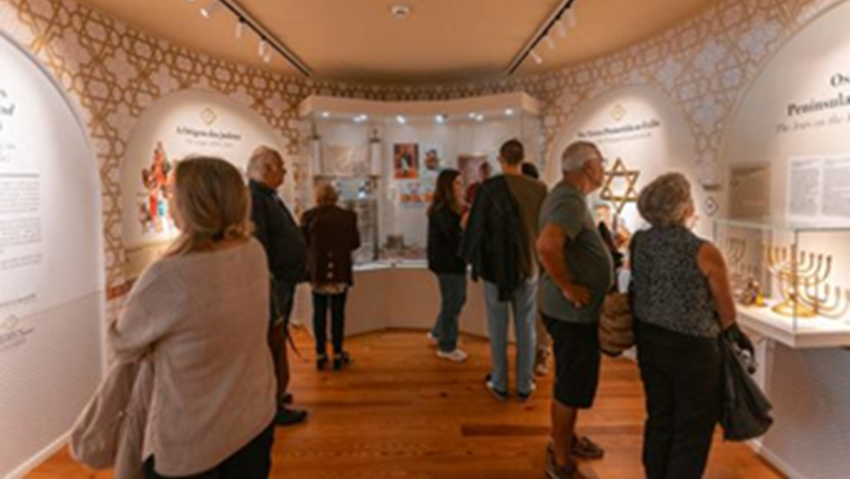
At the entrance to the museum is the welcoming figure of the rabbi, astronomer and mathematician Abraham Zacuto. In the oval room that follows, a journey is made from Abraham and the Seven Noahide Laws to the arrival of the Jews in the Iberian Peninsula, with emphasis on a replica of the Temple of Jerusalem and the Magen David, a Sefer Torah, a chanukiah produced in Toledo based on the ancient art of iron and gold, a statue of Maimonides and the two writings of the great poskim (codifiers) of the Jewish people to this day: precisely the Rambam and Yosef Karo.
In the next space, the names, the fairs and everything that involved in the period before the Manueline edict are exhibited on screens with films, including a huge screen on which the image of what would have been the city then surrounded by walls and which included the old Jewish quarter of Olival is spread. There is also a replica of the epigraph that was once affixed to the synagogue of Monchique. Paintings of superb quality, relating to the foundation, development and decay of the kingdom, are part of the museum collection, highlighting the role of the Jews in the administration of the country that transformed Portugal from a small county to an Empire with 13 million km2. Science, ingenuity, economic resources and an intelligence network abroad were some of the Jewish skills that are highlighted there.
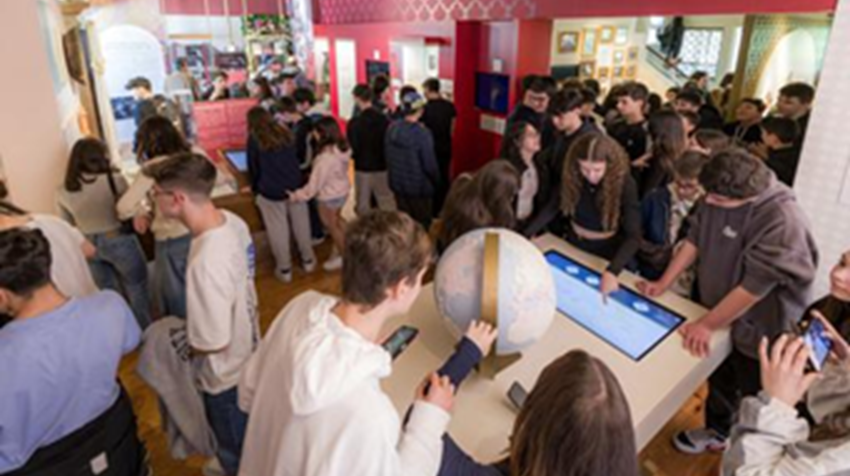
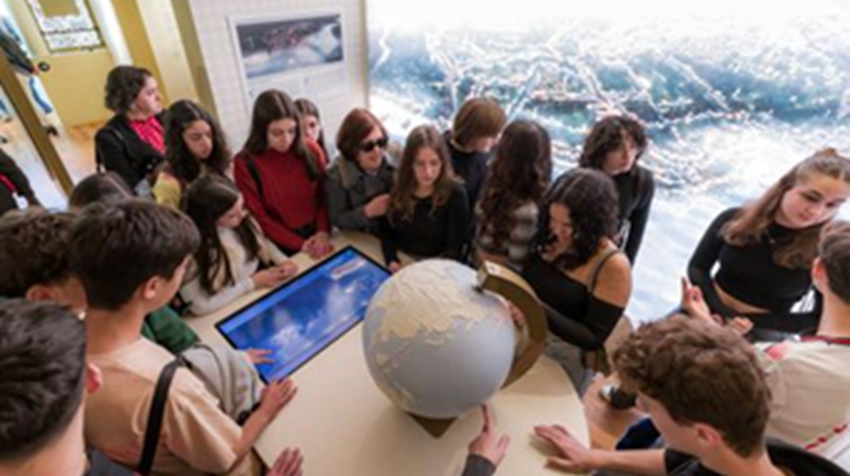
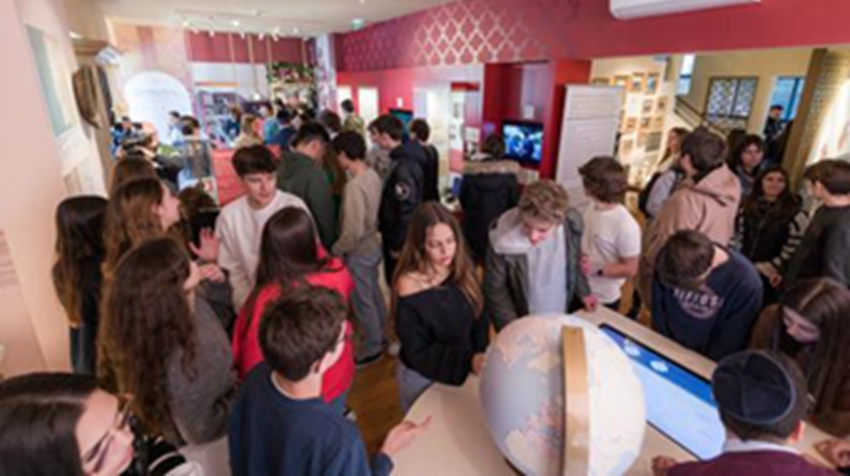
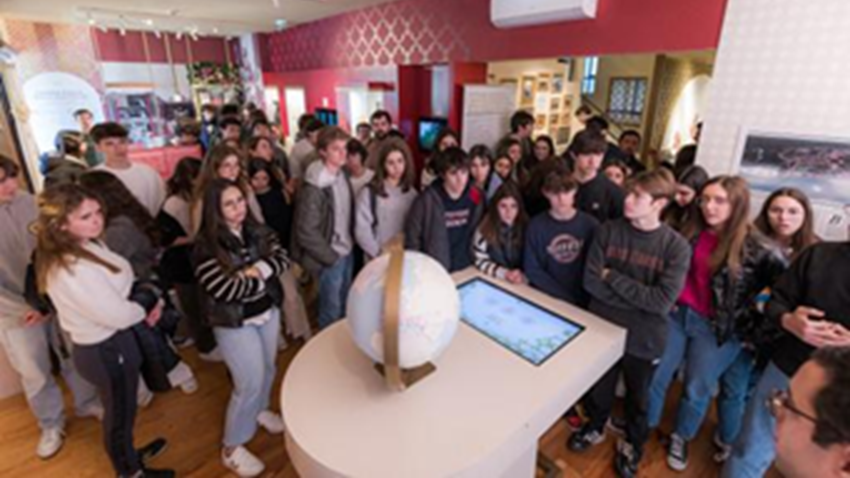
In the part concerning the period of the persecution of the Jews, the visitor can see paintings, books, a globe and a monitor with the destinies of the Jews, as well as the Inquisition they faced throughout the country and in as well. In a large canvas showing the Lisbon massacre of 1506, it was possible to see a wide variety of details: the Convent of São Domingos, a burning pyre burning human remains, the population enraged and armed with sickles as if going to war, Jewish mothers holding their babies before being thrown with them into the bonfires, mutilated bodies on the ground or transported in carts, heads on spearheads, and much more.
The next part reports on the official abolition of the Inquisition and the immediate arrival of Sephardic Jews from Morocco and Gibraltar. An emblematic figure of this exhibition is Jacob Bensabat, the great polyglot of the second largest city in the country at that time. The names of those returned families and the reason why the British banker Moses Montefiori drank kosher Port wine daily until the moment of his death are revealed, as it was certainly produced by that same community.
In the following exhibition, it is revealed how the Ashkenazi community of the city appeared in the late nineteenth and early twentieth centuries and what role was played, in its official recognition, by an officer of the Portuguese army, a hero of the First World War, Captain Barros Basto. The work of rescuing Portuguese marranos attempted by the captain occupies two showcases of the museum, full of information and documents about the living situation and in the light of Jewish law of the Portuguese marranos. A monitor shows part of a community film – "Sefarad" – where the practice of an ancient Marrano ritual is watched in Vilarinho dos Galegos.
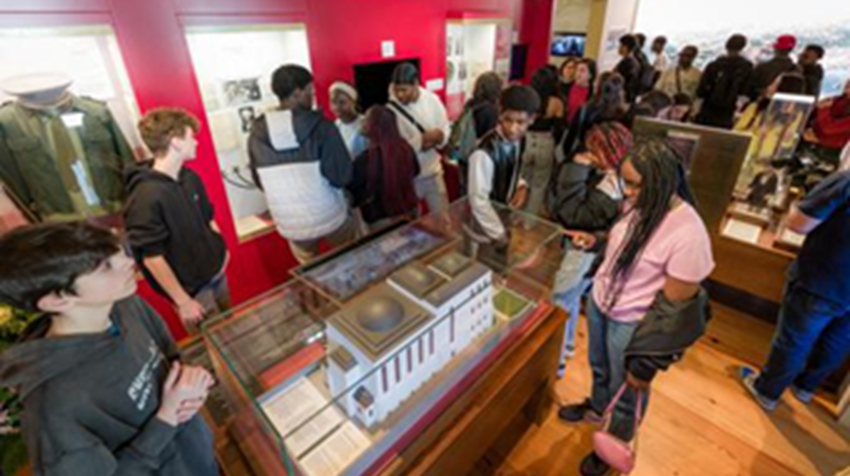
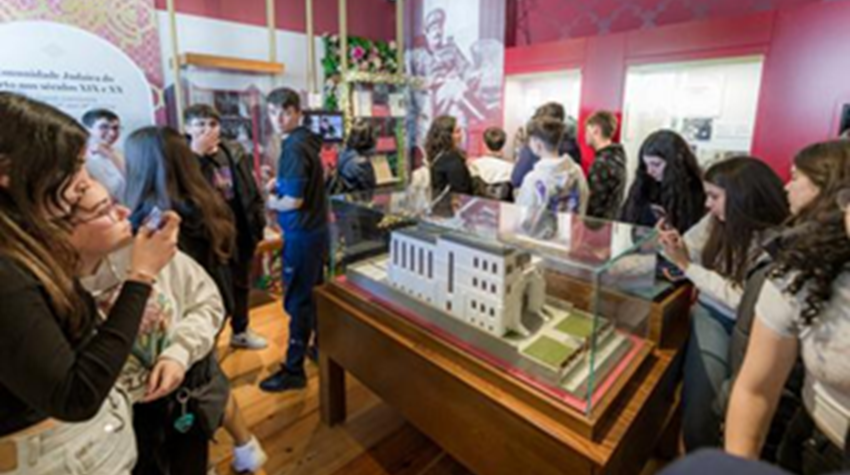
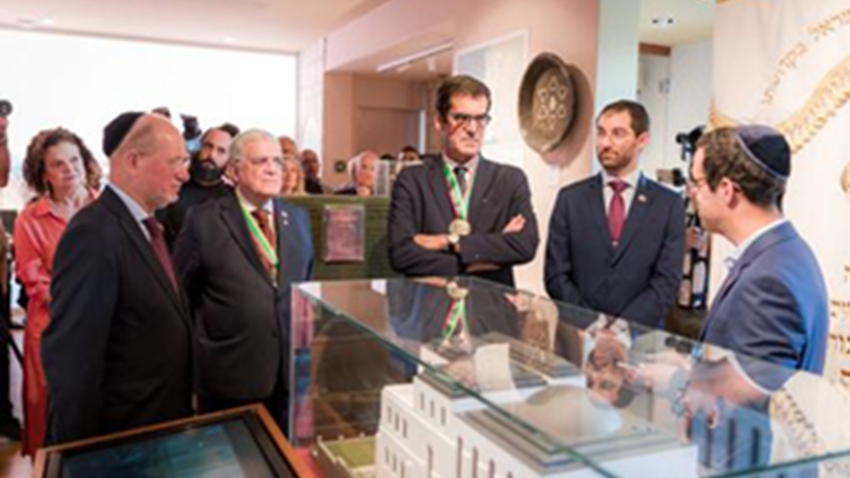
The construction of the synagogue and the visit of the Kadoorie family to the city occupy an important part of the museum. It displays a perfect model of the synagogue whose construction began in 1929, and which was inaugurated in 1938. This was one year after the perverse sentence that created the "Portuguese Dreyfus" case. This has its own showcase, with a uniform with the rank of colonel to which Basto would have been entitled if he had not been illegally removed from service. The official documents that prove this well-deserved and never awarded rank (issued by the army in 2013) are also exhibited there.
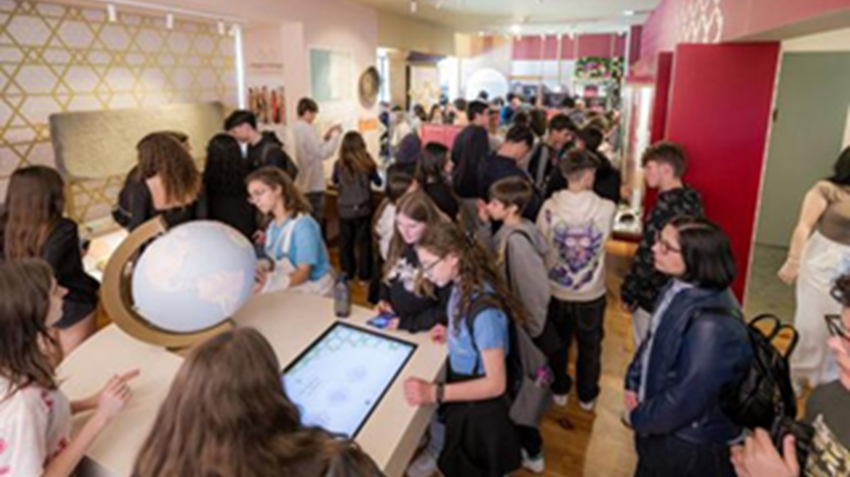
The role of Srul Finkelstein (rabbi of the community), Meir Cymerman and Nathan Beigel (presidents of the board) and Henry Tillo (president of the general assembly) are highlighted and remembered in another window, designed for this purpose. Similarly, the role of the directors Emil Oppenheim and Rodolf Lemchen is highlighted in the next part of the museum, based on the incredible story surrounding the death of the former and the kaddish that, in the presence of the latter, a Catholic nun uttered in his memory.
The arrival of refugees from Nazism is also explained in the museum, with images from a film produced by the community, various official documents and a special highlight for Menassé Ben Dov, the leader of the community who supervised the department called "Support to the Exiles".
The “Modern Antisemitism Room”
The room is beautiful, but its contents are more like a horror film. Government's "Palestinian issue" to close a beneficial law for Jews of Portuguese origin and for Portugal. Trampling on the Religious Freedom of the Jewish community of Porto, by the State and its press, which claimed that the community was not "good" and that its Jews were not "believers". Smear campaign that lasted half a year on all televisions, always, always. Use by all powers of anonymous letters coming from the asylum to defile people's religious faith and their work to promote Jewish life. A criminal case was opened at the request of the socialist government. Invasion of the synagogue. Museum invasion. Invasion of Dreyfus's granddaughter's house looking for "suitcases of money". Professional thieves visit the home of the former president of SIRESP to try to frame philanthropist Patrick Drahi. Nightly assaults on community lawyers to try to find "evidence of crimes" against the institution. Lady lawyer bothered by the State for having a "suspicious" surname. Sabotage of a car that could have led to the death of a young Jewish leader Ilan Cohen and his wife. Lists of Jewish businesspeople from the community exposed in newspapers on the political left. Attempts to poison Israeli Jews at a music festival. Silencing of all this by the political and media system. End of the law hated by the socialist machine and its sponsors. Opening of the Hamas embassy in Lisbon. A totally sinister game and, however, simple to understand for any visitor to the "Modern Anti-Semitism Room".
A decade ago, Portuguese politicians wished the Jews to reconnect with this country. The Jewish population has grown, new Jewish institutions have emerged and in a matter of years the country could have had a truly relevant role in the concert of nations, particularly in exploring the riches of the sea. Yet, the fact is that Portugal's reconnection with the Jews, especially the richer ones, was not to everyone’s liking. Many preferred a backward country with one million unskilled immigrants.
Jewish and later converso merchants maintained transnational networks that supported Portuguese economic interests, connecting Lisbon to markets in the Ottoman Empire, Dutch Brazil, and the Caribbean. Even while persecuted by the Portuguese Inquisition, "New Christians" carried the Portuguese language and commerce to new places, establishing trade links that functioned as part of the "Portuguese Nation" in Amsterdam, Brazil, and Hamburg. In the 17th century, Antonio Vieira, an intelligent Jesuit priest, used connections with prominent Portuguese Jews abroad to influence economic and political processes for the benefit of the Portuguese empire. Jews continued to serve as key cultural, economic, and political intermediaries between the Portuguese crown and foreign powers, particularly in Asia, Eurasia, North Africa, and the Atlantic trade routes. Also the First Republic in Portugal (1910–1926) aimed to foster better relations with the global Sephardic Jewish diaspora of Portuguese origin. While the immediate, desperate need for financial support was more characteristic of the early modern period when Portuguese Sephardic Jews in London and other places acted as diplomats and financiers, the First Republic sought to leverage the reputation and "reconnection" of these communities to project a modern image of Portugal.
The conclusion drawn in that room is that respect for Jews of Portuguese origin ended in the 21st century, not in the 15th century. The influence of Jews of Portuguese origin in nations that would become very powerful – Israel, the United States, China, India, and Russia – tends to be disregarded by contemporary Portuguese elites, as if this fact were a mere accident of nature. The socialist government's “Palestinian question," which led to the forced closure of the law allowing the granting of nationality to Jews of Portuguese origin, was an act that revealed not only a total aversion to the Jewish and Israeli world, but also an effort to deeply wound its targets.
The entire Portuguese Power System called that law a "national shame", the powerful Lubavitch Chabad organization and its formal opinions based on knowledge of Jewish history were considered “forgeries to make money", the Portuguese state treated wealthy Jews as "suspects", called the strongest community in Europe in terms of culture "opulent" and its leaders "non-believers." Sephardic Families were seen as a nuisance to the country that socialists and its sponsors want to build without any concrete connection to Portuguese history. The mainstream system used newspapers to slander people to bring them down, followed by the alarmed intervention of the justice system, which added more absurdities to what has already happened, and finally the politicians who orchestrated the case through propaganda sat comfortably in their luxury armchairs saying 'to Justice what is Justice’s!'" It was an attack against the "Jew", aimed at killing the targeted individuals through imprisonment and illness. Even the granddaughter of the Portuguese Dreyfus never recovered from the depression that afflicted her when she saw her house invaded by the Portuguese State, as well as the synagogue built by her grandfather, due to the unfounded suspicion – based on anonymous letters – that she possessed “suitcases full of money”. Apparently, the Portuguese state's objective was to steal everything she had in her computers in an attempt to fabricate some sin that could tarnish her honor and that of the Jewish community of which she was Vice-President.
Noble intentions
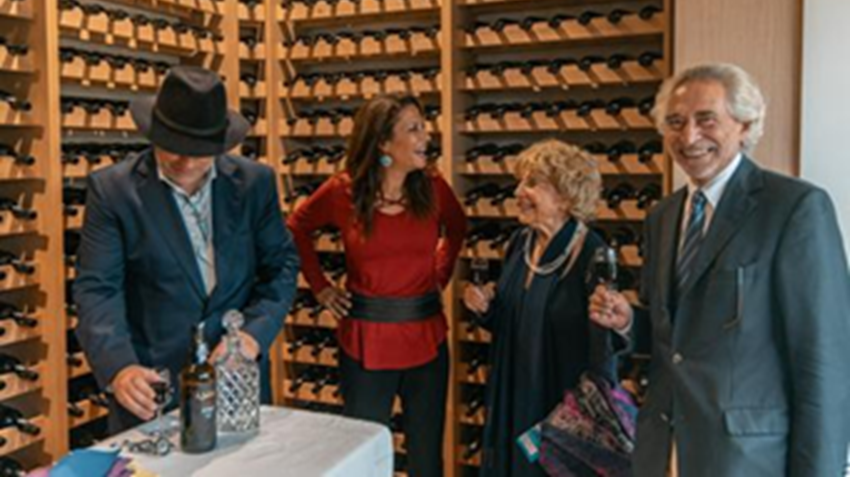
In terms of educational strength, the museum is a portent. The space is not extensive, but it has a collection of information and documentation that is impressive. There is a also movie theater, a kosher Port wine cellar, a room where some of the awards that films produced by the community have received from international festivals are shown, and a room dedicated to the Entebbe operation, which showed the world that, after 2000 years, the Jews once again had a state that could defend them and ensure their safety.
Despite its noble intentions and the great value of its equipment and collections, the Porto Jewish museum has never been able to open to the public because the Public Security Police has refused to provide security, even if paid for by the community, citing no security risks to a Jewish museum located in front of the country’s largest synagogue. The museum sticks to its policy of not opening to the public as long as the State is uninvolved in its security. The so-called “neighborhood policing” – which is nothing more than a police vehicle driving past the museum every hour – would never prevent an attack such as those the world has seen in this open-border Europe.
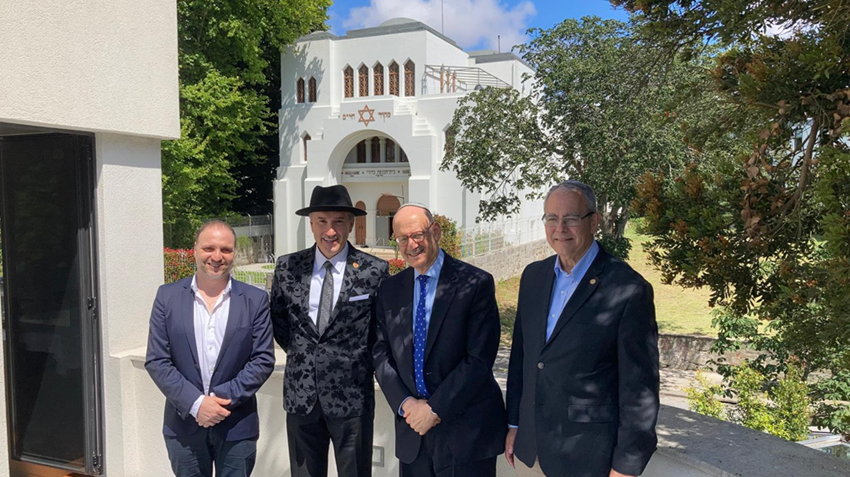
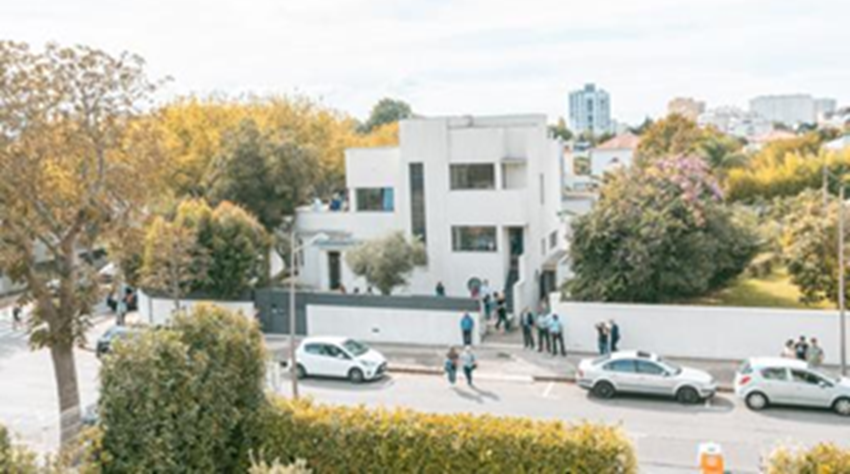
For many reasons, the museum has been described as a work of art. On important dates, the museum has already managed to receive 1000 students from schools at the same time. Ultra-modern in appearance, despite having been built by a private individual in the 1930s, just like the synagogue, that space has not forgotten the development of the Jewish community of Porto in the 21st century and its action to promote religion, culture and material support to communities in 14 cities around the world.


