


Nothing like this has ever happened in the history of Portugal in the last five centuries, in any city, not even on a much smaller scale. Last Shabbat, when the Oporto Jewish Community finished reading the book of Bereshit with a reinforced minyan, the way was opened for the next four books of the Torah, after which the organization will have completed eleven consecutive years of continuously maintaining the minyan in the city's central synagogue.
The minyan, literally "the count," does not mean having exactly 10 men present at the rituals, but at least 10, and it could be dozens or hundreds. It attracts good luck to the Community and represents a gentle rebuke to the mediocre who wanted to destroy it and have failed. It's commonly thought that the minimum number of worshippers required for the ritual to have no limitations is ensured by a large community. This isn't the case.
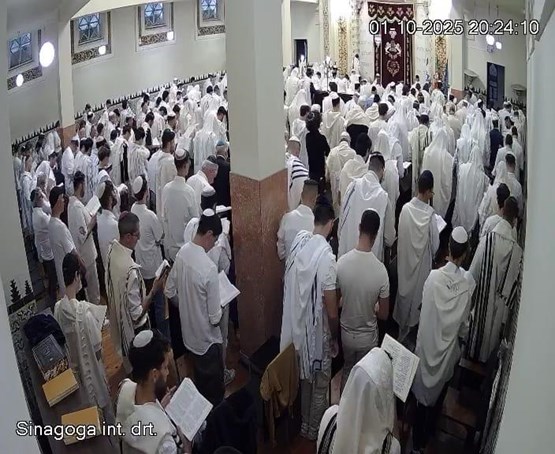
Ten years corresponds to thousands of religious services spread throughout different times of the year, in heat, cold, and rain. As a general rule in the diaspora, most people don't have the habit of attending synagogue regularly; others travel extensively; there are vacations, illness, inability to travel, insecurity, and fear of terrorism, and other reasons that always hinder the functioning of synagogues far from the homes of most of their members.
In Tishrei, the year's readings (the tenth) were completed, and the book of Genesis was restarted. At the time, a historic milestone was reached, as ten consecutive years of minyan on Shabbat and Yom Tov in the Kadoorie synagogue, without a single interruption, were a source of great joy, especially since the community has a second synagogue for young students, which has held a daily minyan for four years. Each year represents a complete cycle of Torah readings, with the call of congregants to the bimah.
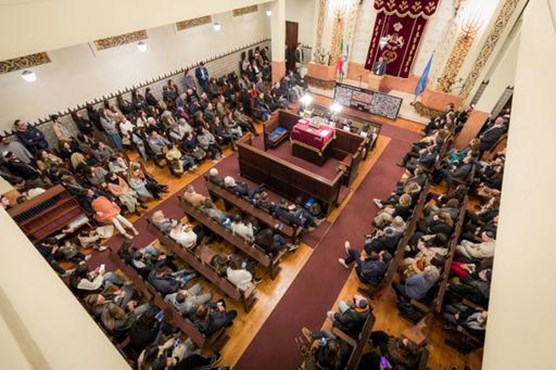
The benefit of always praying with a minyan is not limited to the possibility of saying kaddish and keriah. A minyan brings the shekhinah (divine presence), and each Amen uttered has effects in the mystical and material world. The true shekhinah assures God's intervention in earthly events, just like the cloud and fire that once guided the Israelites in the wilderness. This active presence is marked by divine involvement in all things, projecting radiance and good fortune.
It was the "Portuguese Dreyfus" case, which occurred in 1937, that brought eight decades of shekhinah begalutah (absence of divine presence) to the community. It was doubly negative. Not only did God remain distant from community life and uninvolved, but the community also continually failed in all its initiatives to create Jewish life. The experience was brutal. The weight of the shekhinah begalutah proved unbearable and allowed nothing to be built, like wet firewood that won't burn no matter how hard you try. The energy in the synagogue was one of paralysis, of darkness, like a black hole that swallowed everything in a seemingly endless scene of death.
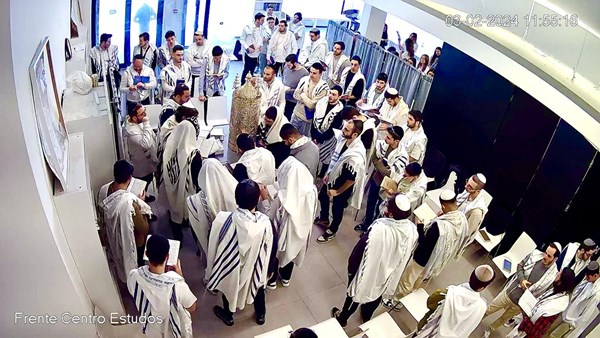
The past is the past. Today, Judaism in Oporto is alive. May it last for many years. Times of peace and prosperity should be enjoyed with joy, but always bearing in mind that years of good harvest are also years of rats.


