

Jewish museum of Porto, entrance room. A journey is made from Abraham to the conquer of Cannã with a special emphasis on a replica of the Temple of Jerusalem and the Magen David, besides a Sefer Torah and the two writings of the great poskim (codifiers) of the Jewish people to this day, precisely Maimonides and Yosef Karo, both from Sephardic origin.
The Temple of Jerusalem is the central point of Judaism. It served as the singular, mandated location for ancient Jewish ritual worship, pilgrimage, and national unity. Even today the kotel is regarded as the holiest site for the Jews, remembering the place where God’s presence was present, known as the Holy of Holies.
The hope for a rebuilt Temple is a foundational element of traditional Jewish faith, tied to the anticipated Messianic era. Jewish prayer liturgy includes daily requests for the rebuilding of the Temple in Jerusalem. This petition is embedded in the Amidah (the central silent prayer) recited three times a day, which asks God to return to Jerusalem and rebuild it, symbolizing a desire for spiritual restoration.
Even in the happiest marriages within the Jewish people, however much unity, celebration, and wine there is in the ceremonies, the broken glass at the end of the wedding acts as a reminder that joy is incomplete without the Temple.
The Temple Institute.
There are several Israeli organizations dedicated to remembering the need for, and actively preparing for, the reconstruction of the Holy Temple in Jerusalem. The most prominent organization is The Temple Institute (Machon HaMikdash) located in the Old City of Jerusalem. Its stated goal is to build the Third Temple on the Temple Mount (Mount Moriah) and they work to educate the public about the importance of the Temple, create necessary ritual vessels, garments, and architectural plans for a future Third Temple.
The Temple Institute has recreated many sacred vessels used in Temple rituals, including the Temple itself, the seven-branched menorah, golden incense altar, and priestly garments. Besides, they train kohanim in the required rituals to be performed in the temple, run a visitors' center in the Old City, and promote the idea that the Third Temple is a "house of prayer for all nations".
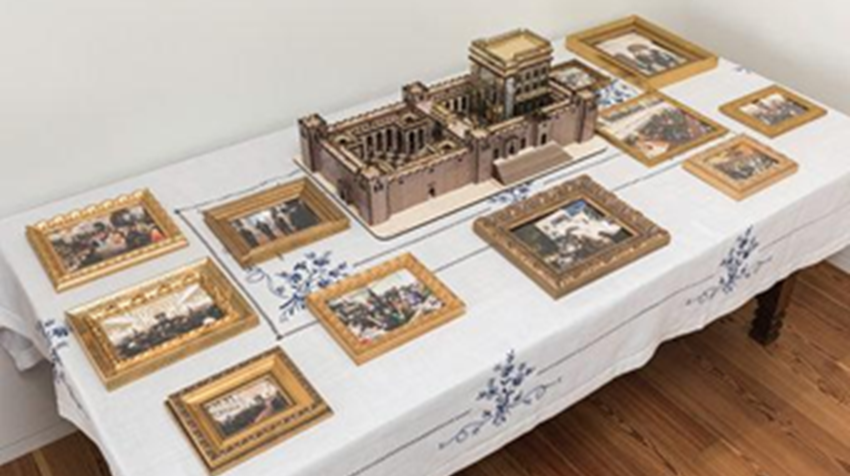
Why the Porto Jewish museum acquired a replica of the Temple.
When the leadership of the Jewish Community of Porto visited the Temple Institute in 2018, the first organization had been contributing donations for years to help the Institute continue its important mission. During that visit, the leaders of the Community brought a replica of the Temple to be integrated into the Jewish museum they intended to inaugurate the following year, which indeed happened.
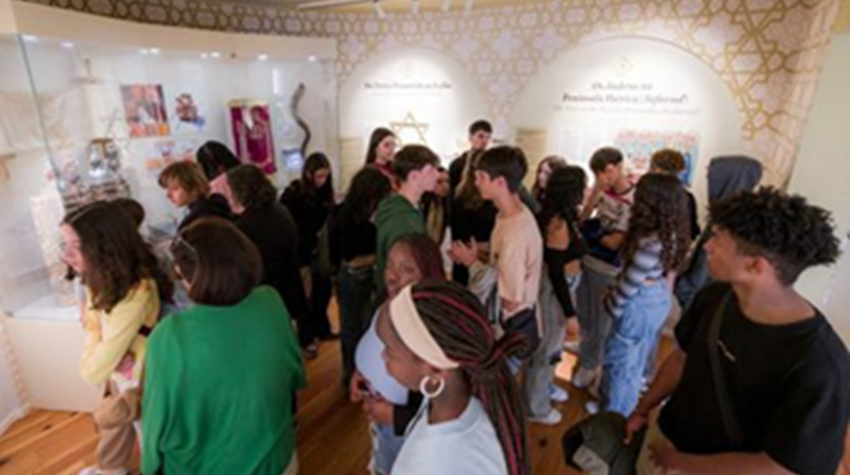
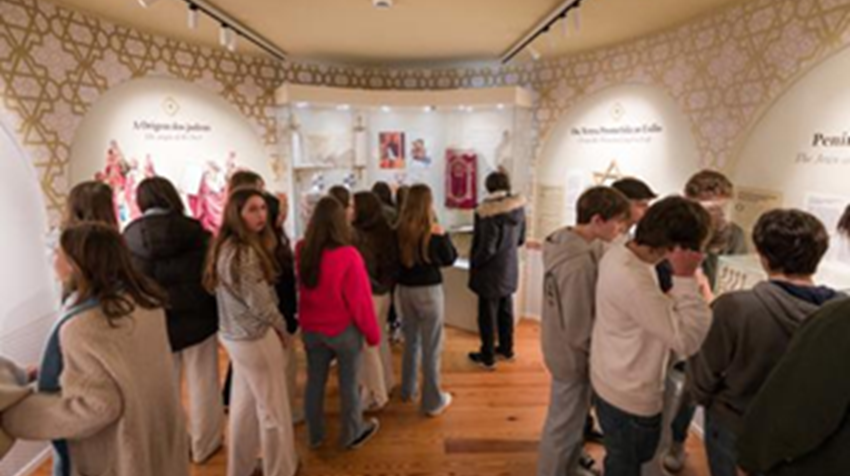
Not by chance, the museum's opening speech was given by the president of B'nai B'rith International, based in Washington. More than just telling the story of the Jews of Sepharad in general and of the main Portuguese northern city in particular, the museum seeks to demonstrate to the uninformed public what Judaism is. The Jew and the non-Jew are not enemies, but partners in the unending Creation.
The Jew has 613 religious obligations (Judaism for the Jew), the non-Jew only has 7 (Judaism for the non-Jew). In Judaism, the numerical value of the word crown (the crown of God) is the number 620 and anyone who knows how to do a simple addition understands why this number exists. Maguen David, known in the non-Jewish world as the Star of David, has seven points of light: the 6 arms of the star and the central point, numbered seven. That's why the non-Jew is só important to Judaism.
The Temple of Jerusalem did not exist for the Jews, but for all nations. The number of Noahides living in Judah at that time was extensive and those Righteous Among the Nations rushed to the temple en masse. This is and always has been the key that has always allowed them privileged access to the Temple of Jerusalem, of which they are complementary and an integral part. Even today, a large part of the world's population is aware that they must fulfill the seven main commandments of human morality.
Current world population: Jews and non-Jews.
The core worldwide Jewish population remains slightly below the 16.5–16.6 million Jews alive in 1939. Today, it is estimated to be approximately 15.8 million and it is concentrated with over 85% living in two countries: in Israel, over 7.4 million (around 46% of world Jewry), in the United States: over 7.4 million (also around 46% of world Jewry).
Yet, the "enlarged" Jewish population including those with non-Jewish household members—is estimated at over 21 million. The number of people eligible for Israeli citizenship under the Law of Return (at least one Jewish grandparent) is estimated to be over 25 million. In general, the global Jewish population is growing slowly, largely due to high birth rates among Haredi Jews, with the overall population of Jews in Israel increasing by about 100,000 every year.
The world population is approximately 8.3 billion people and the number of Jews – as described – is about 15.8 million. Based on the figures provided, Jewish people make up approximately 0.19% of the world's population. Those who fail to mention the words God and Temple of Jerusalem when trying to explain Jewish survival and the continued presence of Jews on all major global political and scientific stages are doomed to failure. Conspiracy theories can only attract the ignorant, the genocides and both. Out of stupidity or inconvenience, they always end up being rudely punished through their own fault.
The Temple Mount was chosen when there were still no Jews in the world.
Jewish tradition attests that millennia ago, long before the birth of the first Jews, something remarkable happened on the Mount that would one day give way to the construction of the Temple in Jerusalem. Before passing away, the father of two sons left half of his land to each of them. Nature has its laws. The old man was ill, succumbed to the disease, and died. The land was divided as he had wished. Two brothers, each with 50% of the land clearly demarcated by heavy boundary markers.
One night, one of the brothers began to think: “I have a magnificent wife; beautiful children and a great job. I am happy. My brother needs more than I do, for he has nothing.” And so, he ran to the land and dragged the boundary marker to his detriment and for the benefit of his brother.
That same night, the other brother thought: “My brother needs more than I do. He has beautiful children who need to run and a wife who loves nature. I have always been content with little and have nothing besides my nephews. It is fair that the majority of the land goes to him.” And so, he ran to the land and dragged the boundary marker to his detriment and for the benefit of his brother.
The next morning the boundary marker was in the same place as always. Then, God decided that one day He would build the Temple of Jerusalem on that land, now known as the Temple Mount.


