


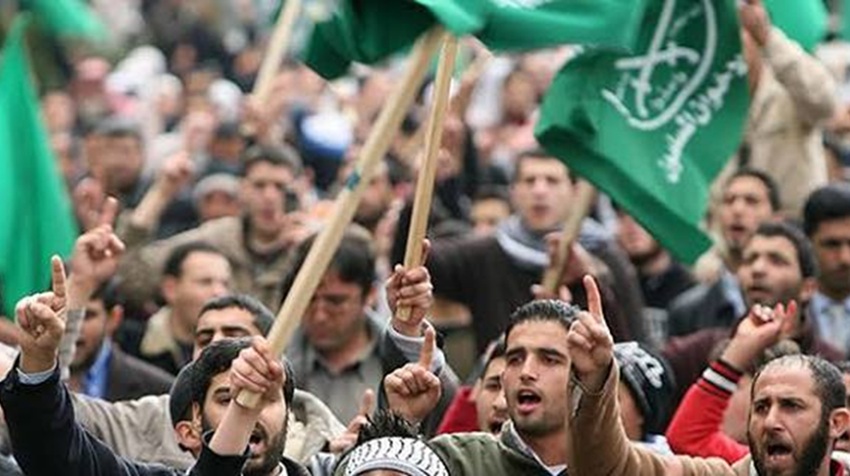
Since its founding in Egypt in 1928, the Muslim Brotherhood has been a network of influence aimed at unifying the world's Islamic factions, however antagonistic they may be. Its objective was "the good of all men," that is, "the establishment of an Islamic government on Earth."
A coordinated political movement in multiple countries led to the immigration of millions of radical Muslims to European territory, while antagonistic cultures, particularly Jews, were ridiculed. Today, the discrimination that the systems uphold protects sexual and racial minorities, not Jews.
The impunity that antisemites have enjoyed for many years may end. Netanyhau already stated that Israel will protect Judeo-Christian civilization and he stated that "antisemitism is like a cancer that spreads when leaders are silent".
Today, Israel and superpowers the US, Russia, China, and India consider the Muslim Brotherhood a terrorist organization. The corrupt system set up by the Muslim Brotherhood in the West may collapse in the coming years.
The State of Israel
Benjamin Netanyahu is openly hostile toward the Muslim Brotherhood, viewing it as a radical Islamist threat to the Jewish state and the Jewish people. "I demand that Western governments do what is necessary to fight antisemitism, and provide safety for Jewish communities worldwide", he stated in January. “I demand action from them NOW, or else there will be consequences." The remarks were perceived as a strong warning to Western leaders to take more aggressive action against anti-Jewish incidents.
United States
In the US, the Muslim Brotherhood and all who support or benefit from it will be considered terrorists and treated as such. Security laws and determinations are being produced. These measures include freezing assets, banning members from entering the US, and prohibiting material support.

Russian Federation
In the Russian Federation, the Muslim Brotherhood is banned and designated as a terrorist organization. The Supreme Court officially banned the group, as Moscow views the organization as a threat to national security, accusing it of promoting radical Islamist ideology, supporting extremist activities, and seeking to destabilize secular governments.
People's Republic of China
In the People's Republic of China, the Muslim Brotherhood is also considered a banned, forbidden, or terrorist organization. The Chinese government restricts all unregistered religious groups, and any organization perceived to have transnational, extremist, or separatist ideologies—such as the Muslim Brotherhood—is viewed as a direct threat to national security and social stability.

Republic of India
In India, the judicial power banned the Popular Front of India, a partner of Muslim Brotherhood, citing links with terror groups, including the training of youth to create a "reign of terror," and funding to destabilize the country.
What is the Muslim Brotherhood
A network of discreet organizations, without a markedly Muslim character, began to be created to influence Western institutions, from educational and cultural centers to governments, political parties, and media groups. From 1928, year after year, decade after decade, the project was refined and adapted to new realities, but the objective never ceased to be to subvert Western culture from within, by the national elites, their laws, and their police, who forced the natives to lose their civilizing references and axiologies and who degraded all the remnants of the Jewish and Christian world that still existed in Europe after the Second World War.

The corrupt “Project”
In 2001, a strange document was seized by Swiss authorities as part of a criminal investigation against two individuals who happened to be members of the Muslim Brotherhood and lived in Campione d'Italia. This document, written in Arabic, came to be called "The Project". The document was considered a roadmap for expanding the influence of Political Islam in Europe and North America. The "Project" laid the groundwork for a gradualist approach, often referred to as "civilizational jihad" or "entrism," focused on cultural and institutional infiltration rather than direct violence, with the ultimate goal of Islamizing Western society. Unlike the radical methods of terrorist groups, the Brotherhood always proposed a patient, long-term strategy.
Europe and Iberian Peninsula
Despite some scandals, such as the suitcases of money that surrounded the European Parliament in 2022, in a case known as Qatar-Gate, the truth is that the endless resources coming from the Muslim world to defend its own interests have never led the EU to stop promoting the mass immigration of radical Muslims and funding the fight against "Islamophobia." On the contrary, millions of dollars are permanently available for this purpose.

In the Iberian Peninsula, the sponsorship and financing of political and media institutions has been carried out by Muslim organizations affiliated with the Brotherhood, by Islamic states, or even by drug networks from Latin America and Africa commanded by Hezbollah and other agents. Sponsorships occur mainly through strategic investments in telecommunications, cultural diplomacy projects, and other sensitive areas that are under Israeli investigation. The most robust form of indirect sponsorship is the entry of large sovereign wealth funds into the capital of companies that control access to the media. As an example, the Saudi group stc (Saudi Telecom Company) acquired a 9.9% stake in Telefónica in 2023, becoming one of the main shareholders of one of Spain's largest communications companies and with strong influence in the Iberian market.
It was understandable that the Iberian political and media powers were hostile towards the so-called Sephardic laws in Portugal and Spain, just as it is not surprising that the media unanimity in the vile treatment given to the Jewish state in its struggles against affiliated groups of the Muslim Brotherhood, such as Hamas, Hezbollah, and the Islamic Revolutionary Guard Corps of Iran.
Portugal
In Portugal, there are organizations that finance specific media projects under the aegis of culture and "social inclusion." The Aga Khan Network (AKDN) supports "cultural heritage and pluralism." At the same time, Saudi investors have shown enormous interest in Portuguese telecommunications assets, such as Vodafone Portugal, as part of a European expansion strategy. With increased economic cooperation (such as the Saudi Arabia-Portugal Business Council), sponsorship often emerges through corporate advertising by large Arab companies in major newspapers and television channels to improve public image and attract "investors" linked to the Muslim world. In the midst of this game, the Jewish businessman Patrick Drahi was practically expelled from Portugal, and nothing more was heard of the sponsorship he wanted to provide for the construction of the Jewish museum in Lisbon.

A crossroads of history
While Portuguese, Spanish, and European societies drag themselves along watching the permanent insult to their national histories and values and the moral and material destruction of their local populations, the Muslim Brotherhood promotes the continuous creation of mosques, schools, and associations that function as centers of activity and indoctrination (dawa) to create autonomous and conservative Islamic communities. However, the fact that the superpowers are now aligned with a strategy hostile to the Muslim Brotherhood makes increasingly precarious the years to come whether for this organization or for its employees in all countries.


