

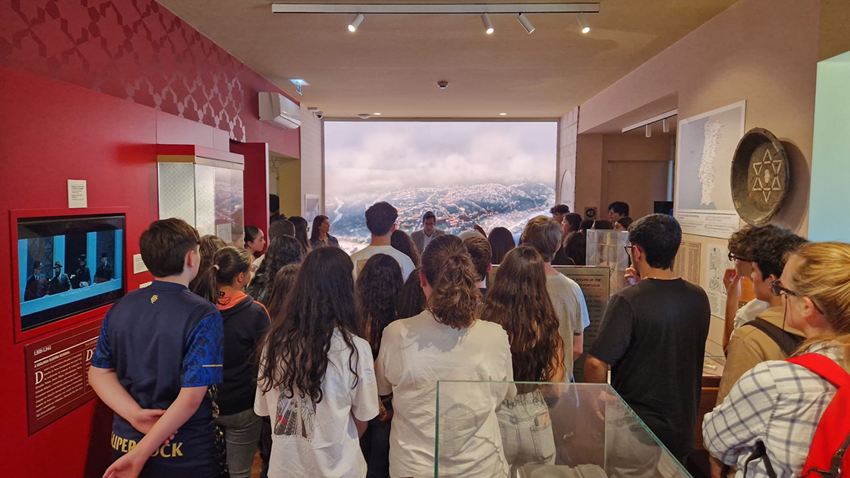
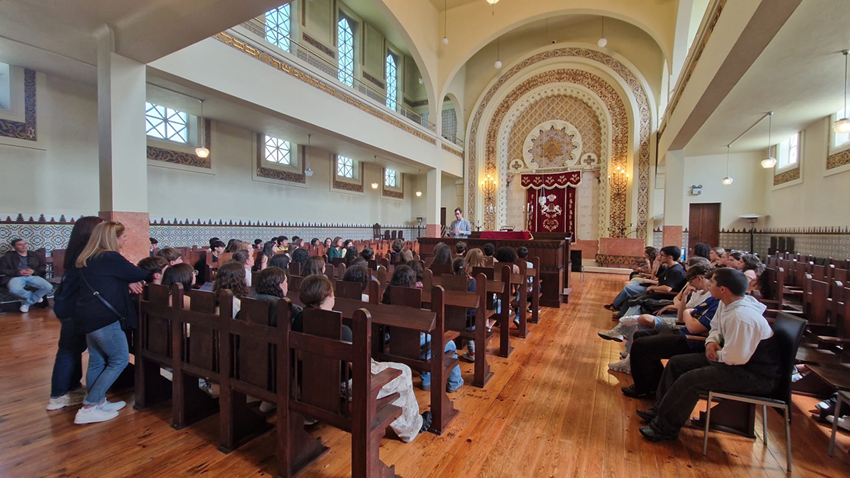
An increasing number of students from Portuguese schools, particularly from the city of Porto, have been visiting the Jewish Community of Porto, either in synagogues or museums, to learn about the Jewish perspective on tolerance. This definition is explained to them in a strangely unusual way: the unacceptable intolerance and necessary intolerance.
At a time when the concept of intolerance generally refers to the behavior of criminals on the margins of society and to a negative attitude, prejudice, or unwillingness to accept views, beliefs, or behaviors that differ from one’s own, often manifesting as discrimination, social exclusion, or aggression, the so-called Jewish intolerance has none of these negative characteristics.
It is not intended to harm third parties and it is considered mandatory when Jewish survival is at stake. In the context of preserving an ancient culture, the Jewish intolerance refers to a deliberate, often communal, decision to resist persecution and assimilation, reject religious or cultural syncretism, pray daily for the return to Jerusalem, record and permanently remember the history of their pursuers, and strictly adhere to Jewish traditional practices, even when these practices make the community unpopular or isolated.
The performance of each generation of Jews is scrupulously analyzed and criticized by the next generation, and if necessary the children will criticize their own parents. The Jewish goal is always to honor the ancestral and future community, not to have many friends.
Throughout history, marriage within the Jewish community, burial in the Jewish cemetery, maintaining distinct dietary laws, a different Sabbath day, and particular dress codes meant Jews could not easily integrate, which protected the community from fading into the majority culture. In addition, Jewish law treats the public violation of religious traditions in public, more severely than private violations, as public actions are seen as a communicative assault on the community’s identity, threatening its collective unity.
Jewish Intolerance is often directed at internal threats, in an effort to keep Jewish practice focused on the strict interpretation of halacha, or to criminal political regimes, whether of an inquisitorial, Nazi, communist or radical Islamist bent. This Jewish stance is not typically aimed at persecuting others, but rather acts as a defensive strategy against external pressures to abandon, adapt, or change authentic, age-old Jewish traditions that are the causes of Jewish success.
The "Jewish stiff-necked nature", an expression often used to describe Jewish resistance to adopting foreign practices, is a historical strength allowing survival under pressure. This strict adherence is seen by proponents as the reason Jewish culture has survived for thousands of years, whereas other nations, despite not being hated or persecuted, have disappeared.
In modernity we have witnessed the curious phenomenon of seeing passionate patriots from their own nations identifying the Jewish people as an example to follow. This is also one of the reasons why they like the Jewish state, which still maintains its symbols from thousands of years ago, such as the shield of David, the Temple Menorah, and others.


