


The first Yom Tov of Pesach ended in Porto yesterday, under the supervision of the Chabad emissary in the city, Rabbi Haim Shetrit. It consisted of two consecutive days (the 1st and 2nd of Nissan) and a body of daily religious services which extended to the Shabbat Chol HaMoed Pesach that has just ended. Because Pesach began last Wednesday night (April 1) and the first two days were Yom Tov (Thursday/Friday), marked by the Seder on both nights and holiday candles, the following Saturday was the first intermediate Shabbat of the holiday to enjoy an intense achdut in the presence of G-d, to sing the Song of Songs (Shir HaShirim) and to make a special Torah reading.
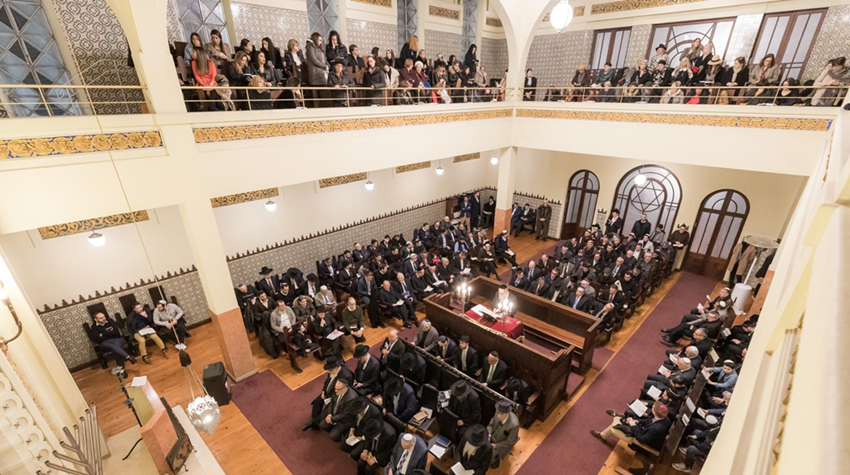
The work of Sephardic Rabbi Haim Chettrit with the Jewish community of Porto is not recent, as he has been responsible for overseeing, in the last five years, the young community of Sephardic students in Porto, in the style of the institution founded by Rabbi Zalman of Liadi. Shetrit lives up to his family history, which once journeyed from the Iberian Peninsula to North Africa. His surname spread between Algeria and Libya, passing through Morocco, Tunisia, and Egypt. That’s why the competent leadership of Rabbi Shetrit and his wife Hanna during the first steps of the current Pesach left no one surprised among the Porto Jewish congregants.
"The city of Porto has something special"
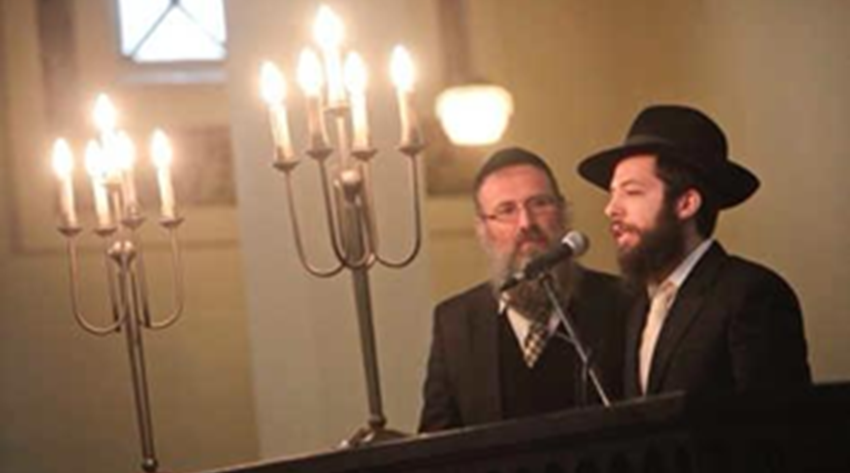
During this Shabbat, Shetrit stated that "the city of Porto has something special". Indeed, the second largest Portuguese city is not only significant because it gave its name to the nation (Porto-gal). There is something more, which probably has to do with the nature of the native non-Jewish population of the city.
Not by chance, Porto was the city chosen by the last Gaon of Castile, Isaac Aboab, to live in, along with the thirty leading Castilian families, who were then the elite of the world Jewish community. The local Jewish community paid 38% of the city's taxes and held sway in international trade. The large vessels dedicated to trade belonged to local Jews.
Aboab's funeral was presided over by Rabbi Abraham Zacuto and attended by Rabbi Yosef Caro, Rabbi Abraham Saba, and all or almost all the great Jewish leaders of that time. Although there are scarce records about this funeral, no other explanation would make sense in light of the basic customs of the Jewish world at that time.
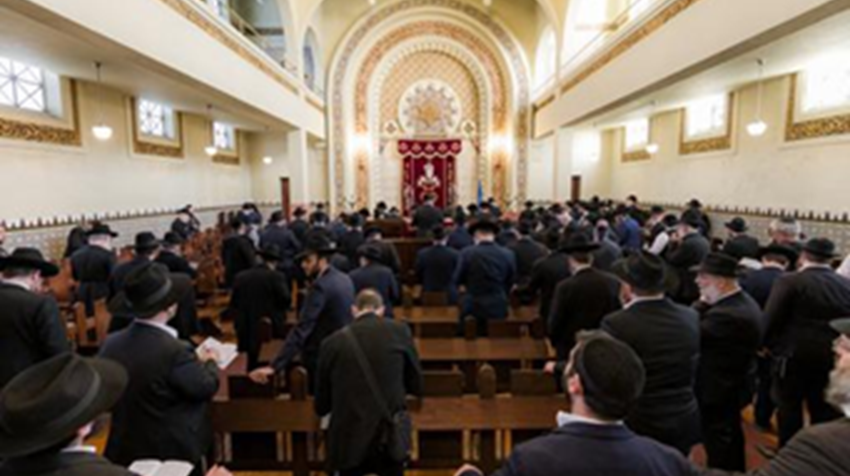
Rabbi Haim Shetrit's responsibility is not small
As an emissary of the Rebbe Shnersoon of blessed memory, Rabbi Shetrit also needs to do justice to Rabbi Baruch Portugali, whose grandson officially founded Chabad in the Russian city of Lubavitch. In porto, everyone trusts Shetrit for the future. The congregation is on track to complete 11 years of uninterrupted minyan service, and it is important to maintain this course year after year, decade after decade. In addition, the honorable Kadoorie family of Hong Kong wishes that the memory of Sir Ely Z"L and his beloved wife Laura Mocatta Z"L be honored through maintaining Jewish life in a building (the Kadoorie synagogue) that – due to the Portuguese Dreyfus affair – was practically abandoned between 1937 and 2012 – a total of 75 long years.
Although a new "Dreyfus affair" has been attempted in the 21st century by state agents and their press – all anchored in a “Palestinian issue”, what Israeli security authorities are apparently treating as a case of terrorism –, the attempt failed and the Porto Jewish Community survived in religious, cultural, and educational terms.
Honoring Rabbis worldwide
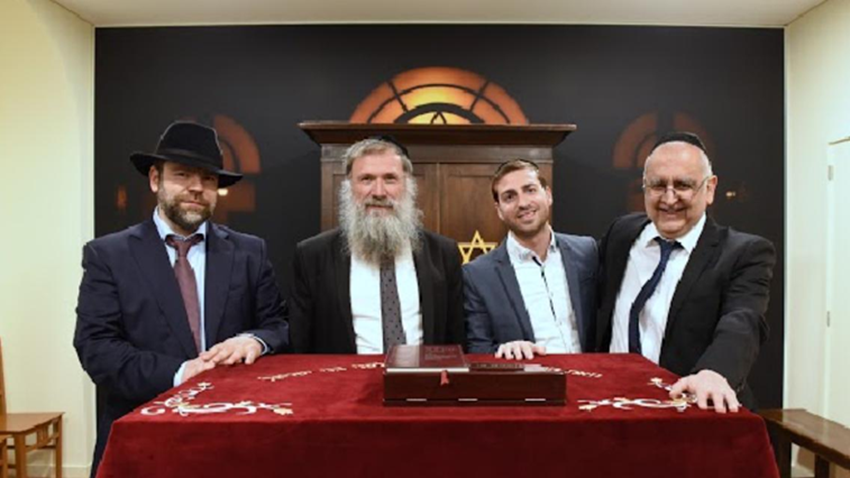
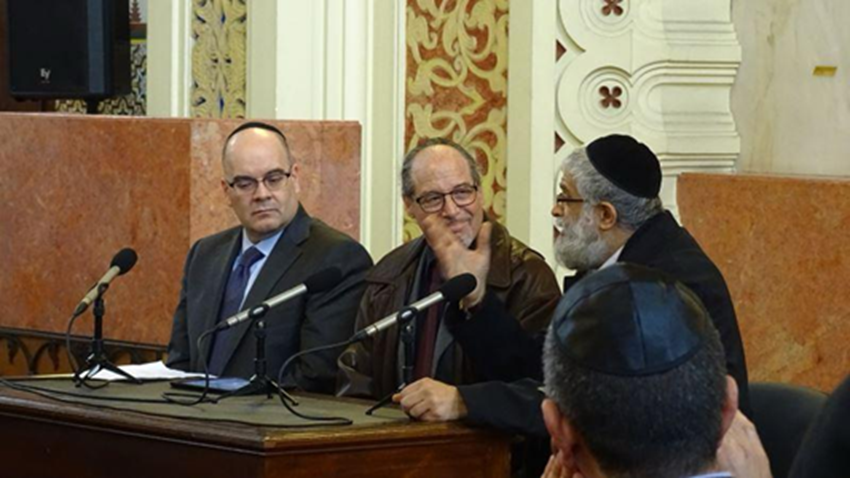
Rabbi Haim Shetrit is aware that he must honor the work of the Rabbis who presided over or were involved in promoting Judaism in Porto over the last decade and a half. Ashkenazi Rabbi Daniel Litvak has been with the Community since 2012 and was given the opportunity to lend his wisdom and the official recognition he holds before the Chief Rabbinate of Israel. Sephardic Rabbi Yoel Zekri was responsible for bringing together the entire resident and newly arrived community, year after year, with inexhaustible energy, as well as nurturing the French Jewish youth who travelled to Oporto with him. Chabad Rabbi Eli Rosenfeld – the president of Chabad Portugal –, supported and worked with the Porto Jewish community on a weekly basis, as well as Rabbi Doron Ahiel (of the London rabbinical court and president of Netzach Yisrael in the same city), Rabbi Asaf Portal (who presides over Ach Tov Vchesed in London) and Rabbi Zeev Sheinin, a central figure of the rabbinate of Ashdod in Israel.
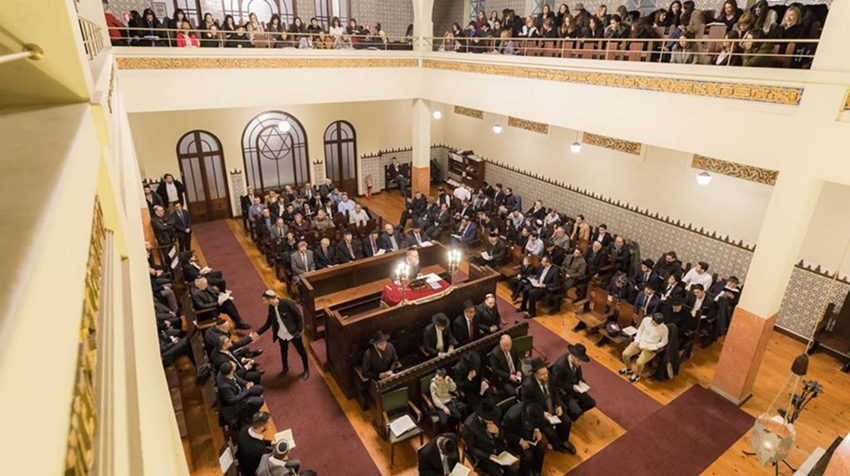
In addition, many other rabbis who actively participated in the development of the Community, in its major events, or in the organization's cooperation with the communities they managed in other countries. Yosef Sheinin (Chief Rabbi of Israel, in Ashdod), Dayan Yisroel Yaakov Lichtenstein, the UK Rosh Beit Din of the Federation of Synagogues; Dayan Yosef Carmel (Jerusalem rabbinical court); Rabbi Menachem Margolin (Director of the Rabbinical Center of Europe and President of the European Jewish Association); Rabbi Yechiel Wasserman (Rabbi of the World Jewish Agency); Rabbi Isaac Haleva Z"L (Sephardic Chief Rabbi of Turkey); Rabbi Abraham Serruya (Chief Rabbi of the Sephardic community of Sucat David, Argentina); Rabbi Shalom Greenberg (Chief Rabbi of Chabad of Lubavitch in Shanghai, China); Rabbi Ysroel Kozlovsky (Chief Rabbi of Chabad of Lubavitch in Mumbai, India); Rabbi Dovid Slavin (Chief Rabbi of Chabad of Lubavitch in Sydney, Australia); Rabbi Berel Lazar (Chief Rabbi of Chabad of Lubavitch in Moscow, Russia); Rabbi Jonathan Benyamin Markovitch (Chief Rabbi of Chabad of Lubavitch in Kyiv, Ukraine); Rabbi Avraham Wolff (Chief Rabbi of Chabad of Lubavitch in Odessa, Ukraine); Rabbi Haim Lazar (Chief Rabbi of Chabad of Lubavitch in Crimea); Rabbi Yossi Simon (Chief Rabbi of Chabad of Lubavitch in London, UK); Rabbi Moshe Freedman Z"L (Chief Rabbi of Chabad of Lubavich in Bahia Blanca, Chabad Center in Argentina); Rabbi Yosef Kantor (Chief Rabbi of Chabad of Lubavitch in Bangkok, Thailand); Rabbi Yeshaya Cohen (Chief Rabbi of Chabad of Lubavitch in Astana, Kazakhstan); Rabbi Yaakov Lazarus (Chief Rabbi of Chabad of Lubavitch in Johannesburg, South Africa); Rabbi Dovid Libersohn (Chief Rabbi of Chabad of Lubavitch in Barcelona); Rabbi Shlomo Bistritzky (Chief Rabbi of Chabad of Lubavitch in Hamburg); Rabbi Avi Webb (Chief Rabbi of Chabad of Lubavitch in Brooklyn, United States); Rabbi Aharon Kanevsky (Chief Rabbi of Chabad of Lubavitch in Kfar Saba, Israel); Rabbi Eliezer Wolff (Chief Rabbi and member of the Rabbinical Court of Europe); Rabbi Abraham Levi (Chief Rabbi of the Spanish & Portuguese Congregation of London); Rabbi Elia Israel (rabbi of the Spanish & Portuguese Congregation of London); Rabbi Yaakov Tenennbaum (president of Kehilat Mishkan Ba'abad of Jerusalem); Rabbi David Kahan (president of Kolelin, Jerusalem); Rabbi Mendy Wilansky (Chabad of Lubavitch, Moscow); Rabbi Lazar Yisroel (Chabad of Lubavitch, Moscow); Rabbi Eli Hayon (Paris); Rabbi David Marciano (Paris); Rabbi Raphael Cohen (Jerusalem); Rabbi Tuvia Od (Tel Aviv); and Rabbi Leib Lebel (Ashdod), descendant of Bal Shemtov and owner of tefillin that date back to Portugal centuries ago.
Portugal
The Jewish world makes no sense without Portugal, and Portugal makes no sense without the Jews. When King Manuel I issued an edict prohibiting Judaism at the end of the 15th century, Jews had already been working alongside the Portuguese kings and the Catholic population for 350 years. The nation had been founded and developed by King Afonso Henriques and his successors, as well as by a descendant of King David – Rabbi Yaish ben Yahia – and his descendants. Furthermore, Yahia was a contemporary, compatriot, and probably a fellow student of Maimonides, and it is impossible to forget that the two great Poskim of the Jewish people to this day – Rambam and Karo – were Sephardic Jews.
Pesach is deeply special for Sephardim
It vividly reenacts their expulsion from Spain and Portugal and subsequent journey to Freedom, acting as a vivid bridge to the Sephardim’s cultural heritage. The holiday highlights a connection to the "Golden Age" not only for the Iberian Jewish population of the time but especially to the kingdoms they were part of, offering a chance to pass down stories of their ancestral home before the Inquisition.
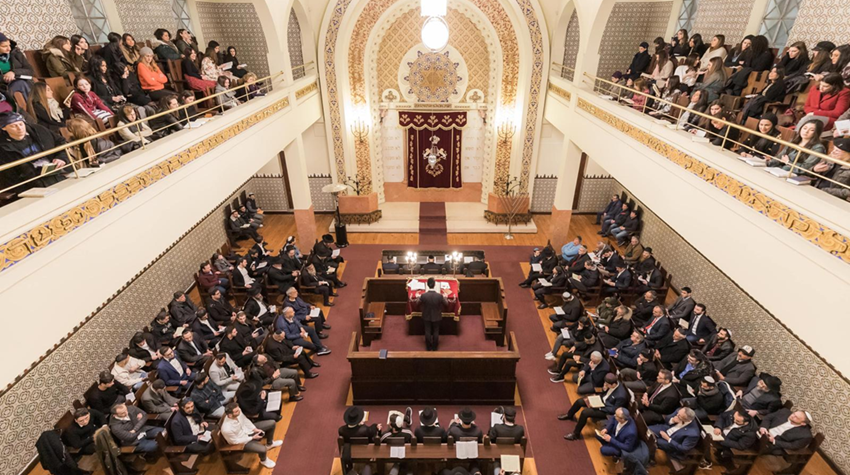
5786’s Pesach continues with Chol Hamoed, the intermediate days, which consist of the 3rd through the 6th days of Passover in the diaspora. These are semi-festive days, followed by the final two days of Yom Tov.

