


The Board of Directors of the Jewish Community of Porto considers the film “Sefarad”, produced in 2018, to be the most important cinematographic work that the organization has produced in the last decade. Although the film “1618” – about the Inquisition in Porto – has garnered hundreds of international awards, becoming the most awarded film of all time in the history of Portuguese cinema, the choice fell on the film “Sefarad”, which also surpassed “The Lisbon Genocide”, “The Kidnapping of 2000 Jewish Children”, and others.
Gabriel Senderowicz, the president of the Community, explains to PJN that the film “Sefarad” has some particularities that make it a truly special work, besides being the first film in the series of six produced by the Community. "The film Sefarad aimed to tell the true story of the 'CIP' association, founded in 1923, that is, the association that brought together the Ashkenazi community of the city – the Bendods, the Beigels, the Yanovskys, the Finkelsteins, the Oppenheimers, and all the other Jews from Central and Eastern Europe who, for decades, were forgotten by historians and even replaced by fictional characters. The film also gives a different perspective on Captain Basto than usual, and above all a more truthful one, both in his qualities and philosophies, and in the suicide that unfortunately came to pass when he decided to welcome envious, poor people in need of recognition at all costs. From accumulated misery can only result total misery."
According to Senderowicz, the historical films that the organization produced are part of its mission to promote Jewish history and stemmed from a broader strategic decision. “In general, there is a moral obligation within the Jewish diaspora to record and promote widespread knowledge of its past and present history. This is a mission we will never forget. There was also a moral commitment from our community to Jews of Portuguese origin, whose low fees – in total, substantial resources – allowed us to produce a cinematic work that otherwise would never have been produced by anyone, whether due to lack of interest, lack of knowledge, or lack of funding. Finally, the history films we produced were an appropriate method to invest financial resources in something that could never end up in the hands of third parties or even the State. We are not naive. Jews have always been robbed everywhere. The history of Portugal is clear proof of that. We learn from the past. How do you steal history films? And museums? And cemeteries? It's impossible.”
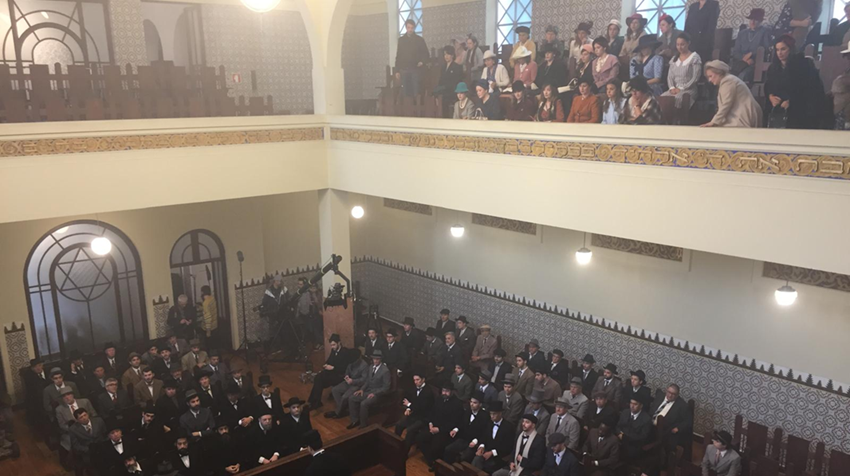
Besides “Sefarad”, the Jewish Community of Porto produced a series of documentaries about Jewish history in Portugal. None of the films were interrupted by artistic embellishments or fictional elements, since the objective was to portray historical events. Here’s the list.
"The Light of Judah" – This film takes a historical journey that spans centuries. From the medieval fairs to the environment of the study rooms of the most cultivated Jews, from the edict of expulsion to the violence of the departure and dispossession of goods and property, from the Inquisition to the rebirth of the Jewish community in the twentieth century, from the Ashkenazi Jew who founded an association with Captain Barros Basto and officially reestablished a Jewish community in the city until the attempt to rescue the Portuguese Marranos by the captain and the Sephardic diaspora, from the cooperation with the Portuguese-Spanish congregation in London to the construction of the largest synagogue in the Iberian Peninsula, from the "Portuguese Dreyfus" case to the arrival and reception of refugees from Nazism, from the decades of emptiness faced by the community to its revitalization in the 21st century, this extremely comprehensive film ends with a mention of the protocol of friendship celebrated between the community and the Catholic diocese in 2018. It is a historical journey.
"The 2000 Jewish children exiled" - The film documentary recounts the tragic fate of two thousand Jewish children who, by order of Dom João II, were exiled to the distant and inhospitable island of São Tomé, 7500 kilometers from Lisbon, after the Expulsion from Spain in 1492. The film recounts the miseries of the exodus, the entry of 120,000 refugees into Portugal, the death of Isaac Aboab in Lisbon, his funeral conducted by rabbi and astronomer Abraão Zacuto, the atmosphere in the city, the old synagogue, the exorbitant demands of the monarch to make the hospitality of the Spanish community profitable and the drastic actions he took towards the defaulters. The dangers and nightmares of the boat trip are narrated, as well as the arrival on the island populated by wild animals that, according to chroniclers of the time, swallowed people alive.
"1506 – The Genocide of Lisbon" – This is another documentary of great quality. It recounts a massacre against the Jews that has been forgotten in history and that is still not integrated into school curricula. For three days, between two and four thousand Jews were murdered in Lisbon. The bonfires were as high as houses, in a city full of dismembered bodies and where heads were paraded on the tips of spears. It was a time of the Black Death and so the city was unguarded in terms of security, since the king and the nobility had chosen to remain on the periphery. Ancient anti-Semitic myths led to disaster. All it took was a small spotlight, literally, to light the fuse that generated so much destruction. It was a popular initiative. The king severely repressed the guilty and the city itself withdrew all privileges.
"1618" - This documentary film has become the most internationally awarded in the history of Portuguese cinema. More than a hundred New Christians were arrested, causing terror in the New Christian community, mass emigration and the almost total destruction of the city's economy. The Inquisition is faithfully portrayed: its philosophy, the exhortation to denounce, the hatred and envy of the people as the engines of the accusations, the collaborators of the Inquisition, the prison carriages, the ghastly prisons, life in the cells, the false prisoners who spied on other detainees, the secret crevices through which the jailer observed what was done and said, the fate of the prisoners, the torture, the public humiliation, the garroting, the stake, the threatened future of so many innocents. A curious detail in this real story was the friction between the judicial authorities and the inquisitorial visit. The relationship between these entities became so extreme that guards on horseback surrounded the ecclesiastical court. The Inquisitor, feeling disregarded, traveled to Spain to complain to King Dom Filipe, but did not hear what he wanted. The justice of the time was independent and in that specific case it proved to be so.
"The Nun's Kaddish" - This short film produced by the community portrays a true story of interfaith kindness that occurred in 1982, when a nun observed a Jewish memorial ritual on behalf of a deceased Jew, Emil Oppenheim, elevating the spirituality of the two religions to a higher feeling of universal brotherhood. The Jewish Community of Porto, persecuted and destroyed by the State in the 1930s, was then practically non-existent. None of its members were present at the burial of Oppenheim, a renowned German jurist who arrived in the city during the Nazi persecution. He remained there until the end of his life working in a small laundry. The kind nun, who had treated him when he was sick, promised to read the kaddish prayer for him, and so she did.
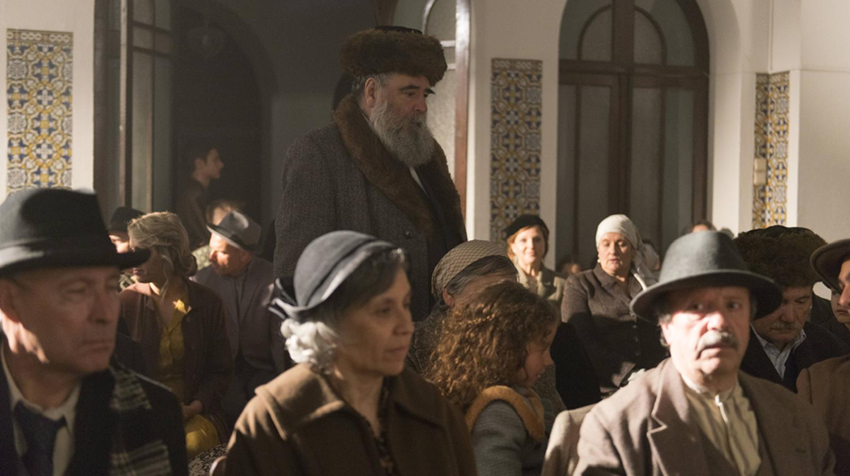
There can be nothing greater in terms of preserving Jewish memory, which is an integral part of Judaism, than the production of films and documentaries based on historical sources of great value and reliability.
Asked if the Jewish Community of Porto has already finished its work producing historical films, Gabriel Senderowicz replied that “perhaps one day – with the help of benefactors – we can produce a film whose script is ready and which would unify in 90 minutes the founding of the Portuguese kingdom, the expulsion of the Jews, the defeat of Dom Sebastião and also a fictional perspective of what the country's future could have been in the 21st century with the help of Jews of Portuguese origin born in the Western and Euro-Asian blocs”.
The Jewish Community of Porto states in its programmatic handbook that it does not exist to please everyone, but to create religion, culture, and educational institutions.


