

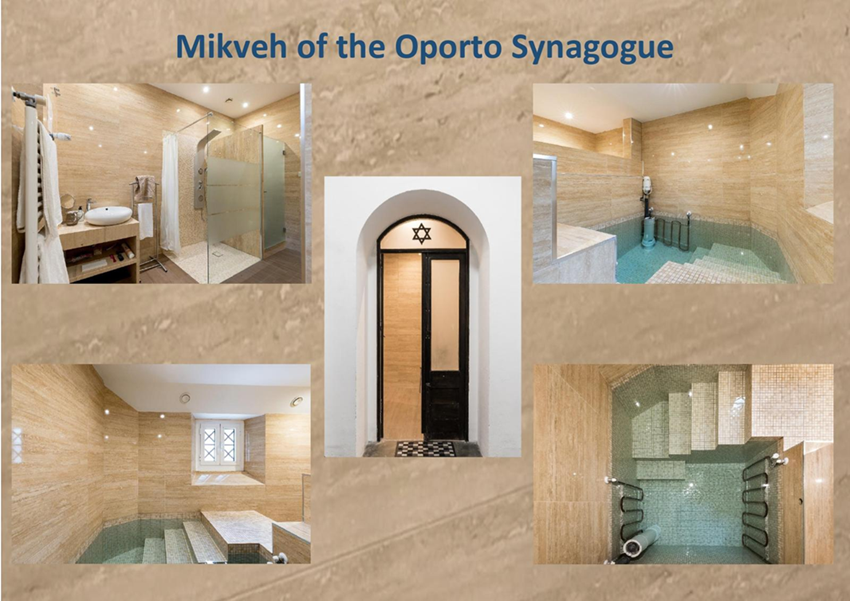
The luxurious ritual bathhouse of the Kadoorie synagogue was not always so. In the time of Captain Barros Basto, the mikveh did not meet the necessary technical conditions to be considered kosher according to Jewish rules. After the Dreyfus affair, orchestrated by the corrupt state in a game of anonymous and slanderous accusations, the community was decimated in its vitality and even condemned to drag out its painful existence, and all this was also reflected in the degrading state of the mikveh.
In 1995 and 2007, when the mikveh underwent profound structural restructuring and became kosher, other problems arose, especially in electrical terms. The electrical panel serving the building dated back to 1931 and, being so old, prevented the mikveh from functioning when the city's low temperatures necessitated heating the water.
Today, more than a decade after the mikveh and the synagogue's electrical panel were renovated in 2015; more than a decade after the mikveh was rebuilt with marble and high-quality materials and plumbing, this very fact helps explain the source of so many Mazal (good constellations) that allow the uninterrupted minyan remains so vibrant in the synagogue, a source of pride not only for the Kadoorie family but for the entire Jewish world.
Jewish law
A mikvah (ritual bath) is considered the most vital institution of a Jewish community, taking precedence even over a synagogue. While a synagogue serves as a communal space for prayer, the mikvah is the essential foundation for Jewish family life and the continuity of future generations.
A group of Jewish families, even extensive, is not legally considered a "community" until they have a communal mikvah. According to the Talmud, a community must prioritize building a mikvah over a synagogue or school. Prayer and social gatherings at the synagogue can technically happen anywhere, but the laws of Family Purity (Taharat Hamishpachah) can only be fulfilled with a kosher mikvah.
History
The general "conversion" of the Jewish people at Mount Sinai is the first mark. According to the Talmud (Yevamot 46b and Keritot 9a), the Israelites entered the covenant through immersion (Tevilah) and probably used natural springs or rivers found in the desert area.
In Shemot 19:10, God commands the people to "sanctify themselves" and "wash their clothes". The requirement for immersion was fulfilled through natural means. Our Sages interpret this "sanctification" as a requirement for full-body immersion in water, as ritual sprinkling was traditionally preceded by immersion. This purification was absolutely necessary to prepare the entire nation for the theophany (the divine revelation) on the third day.
More than three millennia have passed since the founding of the Jewish nation at Mount Sinai. Throughout history, Jewish communities have gone to extreme lengths to maintain mikvahs even under siege as in Masada or during the Holocaust, viewing it as the "portal to a Jewish future". The mikveh symbolizes a return to the womb and a fresh start, used by many before weddings, major holidays like Yom Kippur, or significant life transitions.
Eleven years of minyan in Porto?
It is a fact recorded. Those were exactly the years that a kosher and functional mikveh was available to the local Jewish community. In Jewish law, the obligation to build a mikvah takes precedence over building a home of the minyan. They share a hierarchy of importance in community building.


