


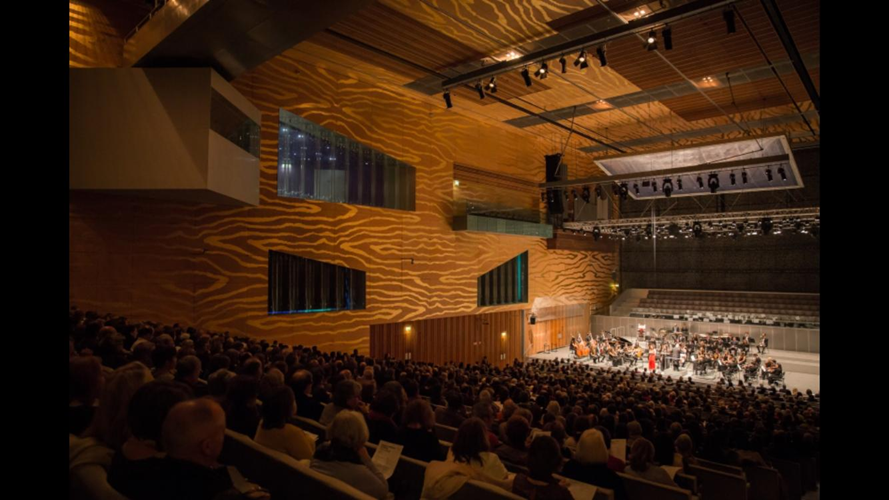
More than 500 years after the Expulsion of the Jews from Portugal, the Concert of Sephardic Memory - "Tradition and Modernity - Tribute to our Jewish musical heritage" - took place at the Casa da Música on November 16, 2017.
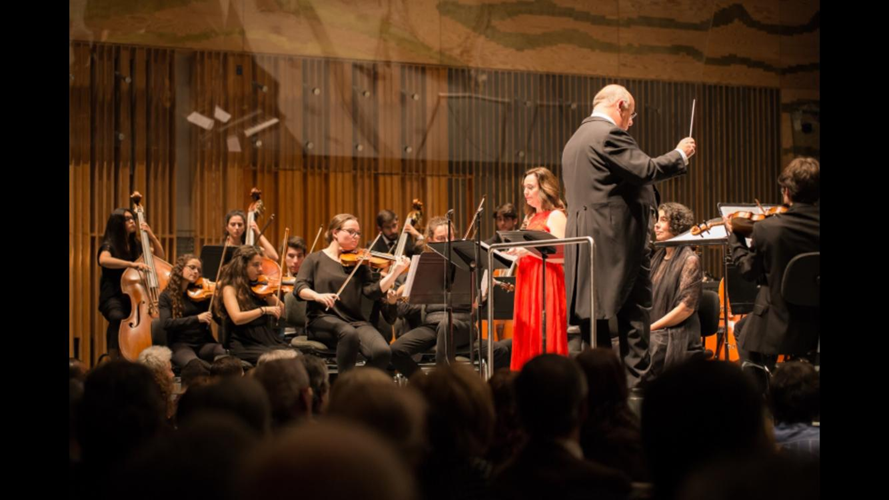
The Sala Suggia in Porto sold out its 1238 seats to hear songs in Ladino. The lyrical singers Linet Saul (from Turkey) and Judit Rajk (from Hungary) interpreted musical pieces, accompanied by more than 70 members of the Orchestra of ESMAE - Superior School of Music and Arts of the Spectacle, directed by Maestro António Saiote.
Ladino, or Judeo-Spanish, is a Romance language originating from the 15th-century Old Iberian Peninsula, spoken by Sephardic Jews after their expulsion from Iberian Peninsula. It blends Spanish and Portuguese with Hebrew, Turkish, and Balkan languages. It was primarily preserved in the Ottoman Empire (Turkey) and parts of the Austro-Hungarian Empire.
Linet Şaul is a celebrated Turkish opera singer and soprano based in Istanbul. Her repertoire spans from Baroque works (such as Luigi Boccherini Stabat Mater) to classical opera roles including Zerlina in Don Giovanni and Musetta in La Bohème.
Judit Rajk is a renowned Hungarian concert singer (contralto) and music educator. She serves as the Director of the Kodály Institute of the Liszt Academy of Music and is recognized for her interpretations of works by Zoltán Kodály, Béla Bartók, and contemporary composers like György Kurtág, who dedicated his Seven Songs (Op. 50) to her.
Portuguese words
The sound of Ladino today is much more similar to Castilian Spanish than to Portuguese. However, the Iberian dialects were practically mixed into a single singularity five centuries ago. Besides, there are dozens of Ladino words of 100% Portuguese origin, insofar as they were never used in the kingdoms of Castile. For instance, Agora / Agora (now), Ainda / Ainda (still), Akavidar / Acavidar (to be careful), Burako / Buraco (hole), Chapeo / Chapéu (hat), Fijon / Feijão (bean), Londje / Longe (far), Manya / Mania (bad habit), Preto / Preto (black), and many more.

When the Jewish Community of Porto filled the Suggia room with congregants and friends of the institution, many realized that the Jews were back in Portugal to produce the culture that once made Portugal a splendid nation, centuries before Karl Marx and Lenin were born or the Brotherhood was founded in Egypt.


